Have you ever had a brilliant business idea, but felt overwhelmed when you had to put it into dozens of pages of a business plan (business plan) boring? In 2026, business dynamics are moving very fast.
Investors no longer have time to read 50-page documents just to understand the basic idea of a business. This is where lean canvas becomes a savior for entrepreneurs and startup owners.
As a culinary entrepreneur or creative businessperson, you need a tool that can summarize all your business logic in just one page. Lean canvas model is here to help you validate ideas, map risks, and discover the unique value of your business without getting bogged down in complicated theories.
Understanding Lean Canvas
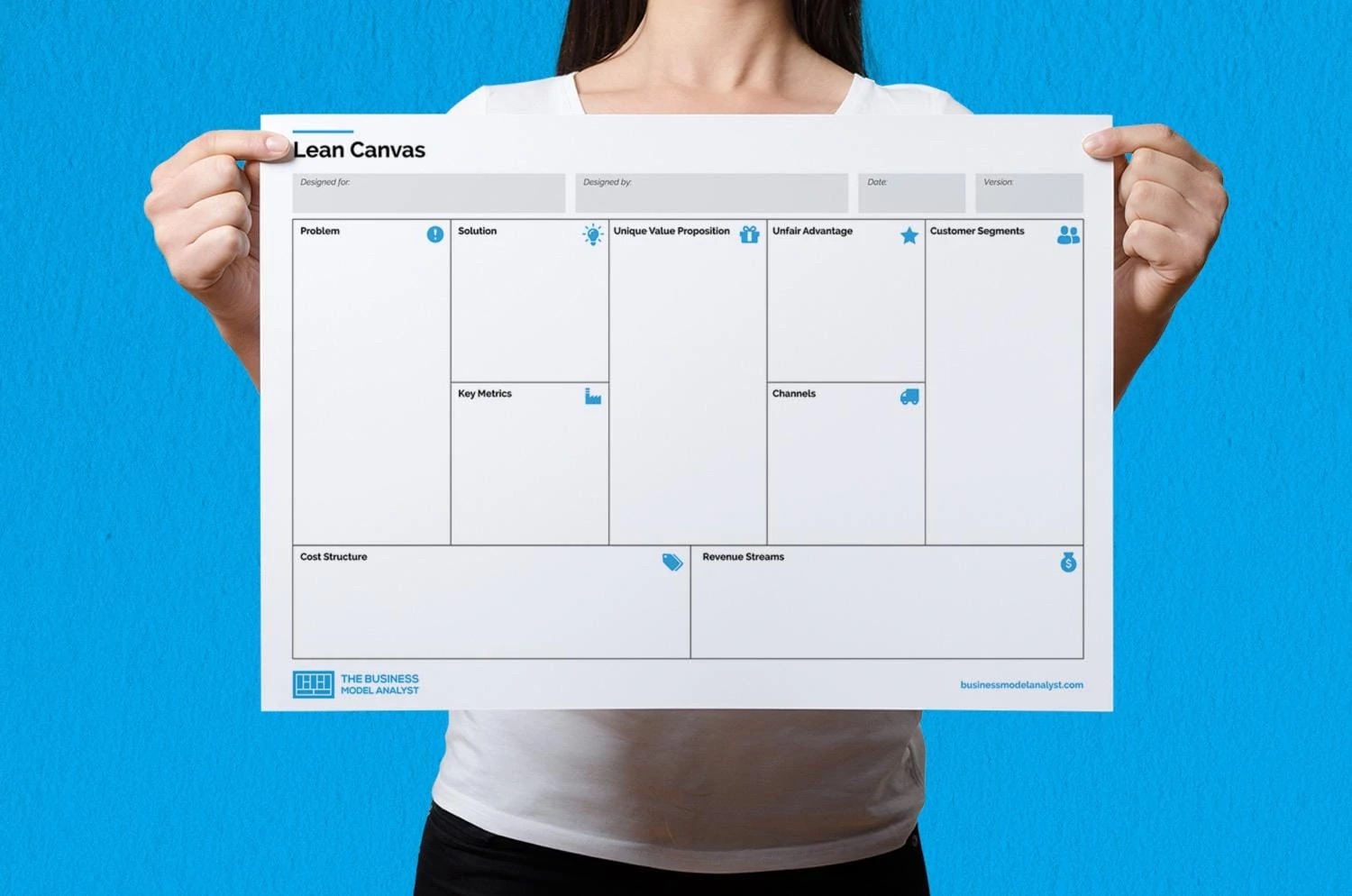
Lean canvas is a one-page strategic business plan template adapted by Ash Maurya fromBusiness Model Canvasmilik Alexander Osterwalder.
While the Business Model Canvas (BMC) focuses more on the operations of established businesses, the Lean Canvas is specifically designed for startups and new businesses still in the process of developing or validating their ideas.
Imagine you're building a trendy cafe. Instead of spending months writing marketing strategies that might not work, you uselean canvas templateto map the main challenges.
The essence of the Lean Canvas is learning quickly. This tool forces you to focus on the problem you want to solve, not just the product you want to sell.
The Difference Between Lean Canvas and Business Model Canvas
Many people often confuse these two tools. While they may appear visually similar, they have different philosophies and purposes. Understanding these differences will help you choose which one is best suited for your current business.
1. Main Focus
- Business Model Canvas (BMC): Focus on how the business is running. This tool is ideal for established companies looking to map their strategic partnerships and key activities.
- Lean Canvas: Focus on whether this idea is feasible. Lean canvas places more emphasis on identifying problems (problem) and solution (solution) amidst market uncertainty.
2. Target Users
- BMC: Used by corporations, managers, and business owners who already have a loyal customer base.
- Lean Canvas: Used by entrepreneurs, startup founders, and innovators who are in the "trial and error" stage.
3. Different Components
There are several blocks in the BMC that are replaced in the lean canvas to make it more relevant for new businesses:
- Key Partners in BMC is replaced with Problem in Lean Canvas.
- Key Activities replaced withSolution.
- Key Resources replaced withKey Metrics.
- Customer Relationships replaced withUnfair Advantage.
Functions of Lean Canvas in Business
Why should you bother filling out lean canvas model? Here are some of its vital functions that will give your business a head start in 2026:
1. Speed up the Idea Validation Process
In business, assumptions are your biggest enemy. You might think everyone needs your healthy catering service, but is that really true? The Lean Canvas forces you to test those assumptions early on before you invest significant capital.
2. Powerful Pitching Tools
When you're standing in front of investors, you only have about 3-5 minutes. By understanding the lean canvas structure, you can explain your business flow very logically: "The problem is X, the solution is Y, our advantage is Z."
3. Increase Customer Focus
Lean canvas puts blocks Problem And Customer Segments side by side. Well, this function is to keep you reminded that your product exists solely because there's a customer problem that needs solving.
4. High Flexibility
Culinary businesses often need to "pivot" or change direction. If your manual brew cafe concept isn't selling well, you can quickly change the contents of your lean canvas to a new concept.grab-and-gowithout having to overhaul the entire planning document.
Lean Canvas Components and Examples

Source: Emily Basileo
So that you understand better, let's dissect the 9 main components inlean canvas templateaccompanied by lean canvas example in the culinary industry (for example: Premium Frozen Food Business).
1. Problem
Identify the 3 main problems your potential customers face.
- Example: Office workers don't have time to cook, it's hard to find frozen food without preservatives, and the taste of frozen food on the market is boring.
2. Customer Segments
Who is your specific target? Don't answer "everyone."
- Example: Working housewives (ages 25-40), millennials living in apartments, and healthy lifestyle enthusiasts. Don't forget to specify Early Adopters (the first person to buy your product).
3. Unique Value Proposition
One sentence that explains why you are different and worthy of being chosen.
- Example: "Five-star frozen meals without MSG ready in 5 minutes."
4. Solution
Describe 3 main features of your product to answer the problem in block number 1.
- Example: Use of technology blast freezing to maintain nutrition, a variety of authentic Indonesian cuisine menus, packaging vacuum-sealed durable.
5. Channels
How does your product get to your customers?
- Example: Instagram Ads, official website, GrabFood/GoFood, and partners reseller in housing.
6. Revenue Streams
Where does the money come from?
- Example: Retail product sales, monthly subscription packages, and shipping costs.
7. Cost Structure
What are the biggest costs you have to pay?
- Example: Purchase of fresh raw materials, electricity costs forfreezer, digital marketing costs, and packaging.
8. Key Metrics
How do you know your business is successful?
- Example: Number of daily transactions, percentage of customers who buy again (retention rate), and the number of new followers on social media.
9. Unfair Advantage (Advantage that is Difficult to Copy)
What do you have that competitors can't buy or copy easily?
- Example: Legendary family recipes or exclusive access to the best organic meat suppliers.
Tips for Filling Out Lean Canvas Effectively

Sumber: Istockphoto
So that lean canvas exampleWhat you make is not just for display, follow these tips:
- Use Simple Language: Don't use overly complicated technical terms. Make sure even a lay person understands what you mean.
- Don't Go Into Too Much Detail: Remember, this is a canvas, not a novel. Just the key points.
- Regular Updates: The Lean Canvas is a living document. After you've tried selling for a month, return to your canvas and change any areas that don't align with the reality.
- Compare with Competitors: Try creating a lean canvas for your competitors. That way, you can see where you can penetrate.
Challenges in Developing a Lean Canvas
Even though it looks simple, many business people get caught up in several things. Often we feel that our solution is the best, even though the customer doesn't feel it.
In addition, many people fill this section with "low prices." Remember, low prices aren't an unassailable advantage. Anyone can slash prices. Think of something stronger!
FAQ About Lean Canvas
1. What Is Lean Canvas?
Lean canvas is a one-page business plan template used to map out business ideas in a fast, simple, and strategic way.
This model helps entrepreneurs understand customer problems, proposed solutions, target markets, revenue streams, costs, and business advantages in one concise view.
Lean canvas is suitable for startups, MSMEs, and new businesses that are still in the idea validation stage.
2. What Is the Function of Lean Canvas in Business?
The function of lean canvas is to help business owners validate ideas, reduce risks, and develop business strategies more quickly. With lean canvas, business owners can assess whether their business idea truly solves customer problems before investing a large amount of capital.
Lean canvas is also commonly used as a pitching tool because it can explain a business concept in a short and easy-to-understand format.
3. Why Do Culinary Businesses Need to Use Lean Canvas?
Culinary businesses need to use lean canvas because the F&B industry changes very quickly. Customer preferences, menu trends, raw material costs, and sales channels can shift in a short period of time.
With lean canvas, business owners can test menu ideas, restaurant concepts, or delivery strategies before spending a large amount of capital.
4. What Is an Example of Lean Canvas for a Culinary Business?
An example of lean canvas for a culinary business can start with a customer problem, such as the difficulty of finding a quick, healthy, and affordable lunch. The solution could be a healthy rice bowl that is ready to order through online delivery.
The target customers could be office workers, students, or young families. The sales channels may include Instagram, a website, online ordering apps, QR ordering, or food marketplaces.
Meanwhile, the key metrics could include the number of daily transactions, repeat orders, and customer ratings.
5. What Are the Most Important Lean Canvas Components for Culinary Businesses?
All lean canvas components are important, but for culinary businesses, the Problem, Customer Segments, Unique Value Proposition, Channels, and Cost Structure sections need to be given more serious attention.
Business owners need to understand what customer problems they want to solve, who their target buyers are, what makes their menu unique, how customers will make purchases, and which operational costs must be controlled.
6. How Does ESB Help Culinary Businesses Execute Strategies from Lean Canvas?
Lean canvas helps build a culinary business strategy, but execution still requires well-managed operations.
ESB helps F&B business owners execute their strategies through a more integrated system, including a POS system, online ordering, inventory management, sales reports, and operational data.
With ESB technology, restaurant owners can monitor menu performance, manage transactions, control operations, and make business decisions based on more accurate data.
Conclusion
Lean canvas helps culinary business owners design business ideas more quickly and strategically. Through one simple page, you can map customer problems, solutions, target markets, costs, and business revenue streams.
However, a strong strategy still needs to be supported by well-managed operations. In the culinary business, transaction management, orders, inventory, and sales reports must run efficiently so the business can grow.
The ESB ecosystem is here to help culinary business operations become more integrated, from POS systems, ordering, inventory management, to business reports.
Contact the ESB Team now to find the right solution for your restaurant, cafe, or culinary business needs.


