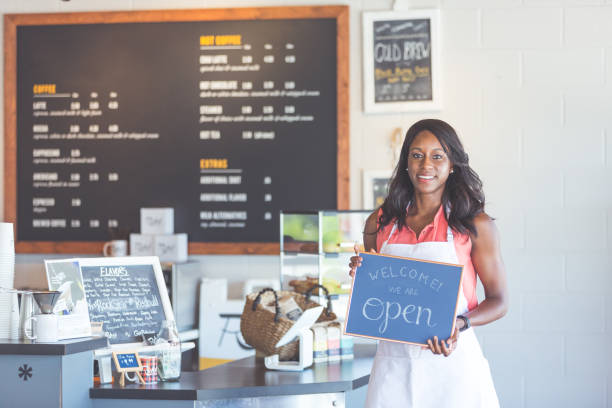
Many businesses appear to be bustling upon opening, but behind those long lines, problems often arise.
Service is patchy, staff are often confused, and systems aren't running smoothly.
This is where many people start asking questions.soft opening meanswhat it actually is and why this stage is often skipped.
In fact, understanding soft openings is important before moving on to more ambitious grand openings.
This article will invite you to understand soft opening in general first, then flow more specifically to restaurant soft opening, so you can see the differences in their entirety and relevance to culinary business practices.
Understanding Soft Opening from a Business Perspective
If pulled to the bottom, soft opening refers to the initial, limited reopening phase.
At this stage, businesses begin operating, but at a controlled scale. The goal is to check readiness.
Many business people still misunderstand. They think a soft opening is a smaller version of a grand opening.
However, their functions are very different. A soft opening focuses on the internal, while a grand opening focuses on the external.
By understanding soft opening means as a trial period, you can be more relaxed about small mistakes. In this phase, learning is far more important than appearing perfect.
Read Also:Understanding Restaurant Minimum Spend and the Reasons Behind It
Why Soft Openings Are Often Underestimated
One reason soft openings are often overlooked is because their effects aren't immediately visible. However, their impact is significant in the long term.
Soft opening helps you recognize operational rhythms before customer pressure becomes greater.
At this stage, you can see how the team works. You can also experience the service flow from a customer's perspective.
This is a key value that's often overlooked when people focus solely on the grand opening celebration.
What is Meant by Grand Opening?
After the soft opening and evaluation, the business enters the grand opening phase. This is where extensive promotions are conducted.
Social media is ramped up, discounts are offered, and the public is encouraged to come.
At this stage, the business should be ready. The systems are in place. The team understands their respective roles.
This is the point where the difference between a soft opening and a grand opening is clear.
Connecting Two Often Interchangeable Levels

Sumber: Istockphoto
Problems arise when these two stages are confused. Many businesses jump straight to a grand opening without a thorough soft opening.
As a result, the pressure builds too quickly.
This is where it is important to understand the difference between a soft opening and a grand opening.
From the start a soft opening gives you room to breathe, while a grand opening demands consistency.
If you force everything to be perfect on the first day, the risk of team burnout is greater.
Read Also:Want to Expand Your Business? Tips on How to Open a Branch Office That You Need to Know!
Soft Opening as a Safe Learning Space
One of the strengths of a soft opening is its more flexible atmosphere. Customer numbers are typically limited, and expectations are lower.
This, of course, provides a safe learning environment.
In this context, soft opening is a time to gather feedback. You can hear customer feedback directly. You can see reactions to the menu or service.
Getting into a More Specific Context, Restaurant Soft Openings
After understanding the general, the discussion flows to restaurant soft openingIn the culinary world, soft openings play a much more crucial role because they directly impact the customer experience.
A restaurant involves many elements. The kitchen. The service. The taste of the food. The timing of the serving.
Everything needs to be in sync, and this is where it all comes into play.restaurant soft opening so it's an opportunity for adjustment.
Real Challenges of a Restaurant Soft Opening

Sumber: Istockphoto
In restaurants, soft opening challenges often arise from small things. Orders arrive all at once.
The kitchen hasn't yet settled into a rhythm. Servers are still learning how to communicate.
This is precisely where the value of a soft opening comes into play. You can identify gaps that need to be addressed before scaling your business.
Ifarti soft opening is understood as a practice phase, these small mistakes actually become learning assets.
Read Also: The Difference Between Open Bill and Closed Bill in the Culinary Business
The Difference Between Soft Opening and Grand Opening in the Culinary World
At the restaurant, the difference between a soft opening and a grand opening. It's becoming increasingly clear.
A restaurant's soft opening is usually quieter. Customers come from a limited circle. It could be friends, family, or a specific community.
Meanwhile, a restaurant's grand opening is usually open to the general public. Promotions are already in place, and customer expectations are also higher.
Without a neat restaurant soft opening, the grand opening can feel overwhelming.
Why Do Restaurant Soft Openings Need to Be Staged?
Many restaurants are successful because they started with small steps. Soft opening.
This gives you the opportunity to test our signature dishes. You can see which ones are most popular.
Additionally, a restaurant's soft opening helps adjust portion sizes and prices.
These can be adjusted before the business is fully launched to the wider market. This approach makes the restaurant look more ready for the grand opening.
Many customers actually enjoy being involved in the soft opening phase. They feel like they're part of the business journey.
If soft opening is the moment to build a narrative, then the grand opening is the stage to tell it to the public.
Common Mistakes When Running a Soft Opening
One common mistake is treating a soft opening like a grand opening. The promotion is too big, the number of customers is too large, and the team isn't ready.
Another mistake is running a soft opening without evaluation. In fact, the essence of soft opening means to learn and improve. Without evaluation, a soft opening loses its meaning.
After the soft opening, the next important step is evaluation. What went well and what needs improvement.
All these notes will serve as a basis for the grand opening.
At this point,the difference between a soft opening and a grand opening. This is evident in how businesses make decisions.
A soft opening gathers data. A grand opening executes a strategy.
Restaurant Soft Opening and Team Readiness
Teamwork is key in the culinary business. A restaurant's soft opening helps the team adapt. They learn to work together.
They understand the real workflow, not just theory.
With this approach, the team felt more confident during the grand opening, and the pressure felt more manageable.
This is the reason whysoft opening isa worthy investment of time.
Soft Opening Through a More Professional System
As businesses grow, manual management can often feel overwhelming. Many restaurants are starting to consider a more streamlined system.
A restaurant's soft opening can be the first step in introducing digital systems, from transaction recording to operational management.
These small steps help the business grow in a more structured manner.
To summarize,the difference between a soft opening and a grand opening. It depends on the goal and approach.
A soft opening focuses on internal readiness, while a grand opening focuses on external exposure.
FAQs About Soft Openings and Grand Openings
1. What is a soft opening?
A soft opening is the initial, limited opening of a restaurant or business. The goal is to test operations, service flow, and team readiness before opening to the general public.
2. What is meant by a grand opening?
A grand opening is an official opening held on a large scale. It's usually accompanied by promotions, special events, and marketing activities to attract more customers.
3. Why are soft openings and grand openings often misunderstood?
Because both are opening moments, a soft opening focuses on internal evaluation, while a grand opening focuses on promotion and branding.
4. Which should be done first?
A soft opening should be held first. This stage helps businesses address any shortcomings so that the grand opening runs more smoothly and effectively.
Conclusion
A soft opening is an important learning process before a big performance. So, by understanding soft opening means, you can avoid many mistakes that often occur at the start of a culinary business.
If you want to run your restaurant's soft opening and grand opening with a more streamlined process, digitalization could be the next step.
In fact, transactions and data are integrated in one system. It's time for your business to take more confident steps with the support of restaurant ecosystem solutions from ESB.
Contact the ESB Team now!


