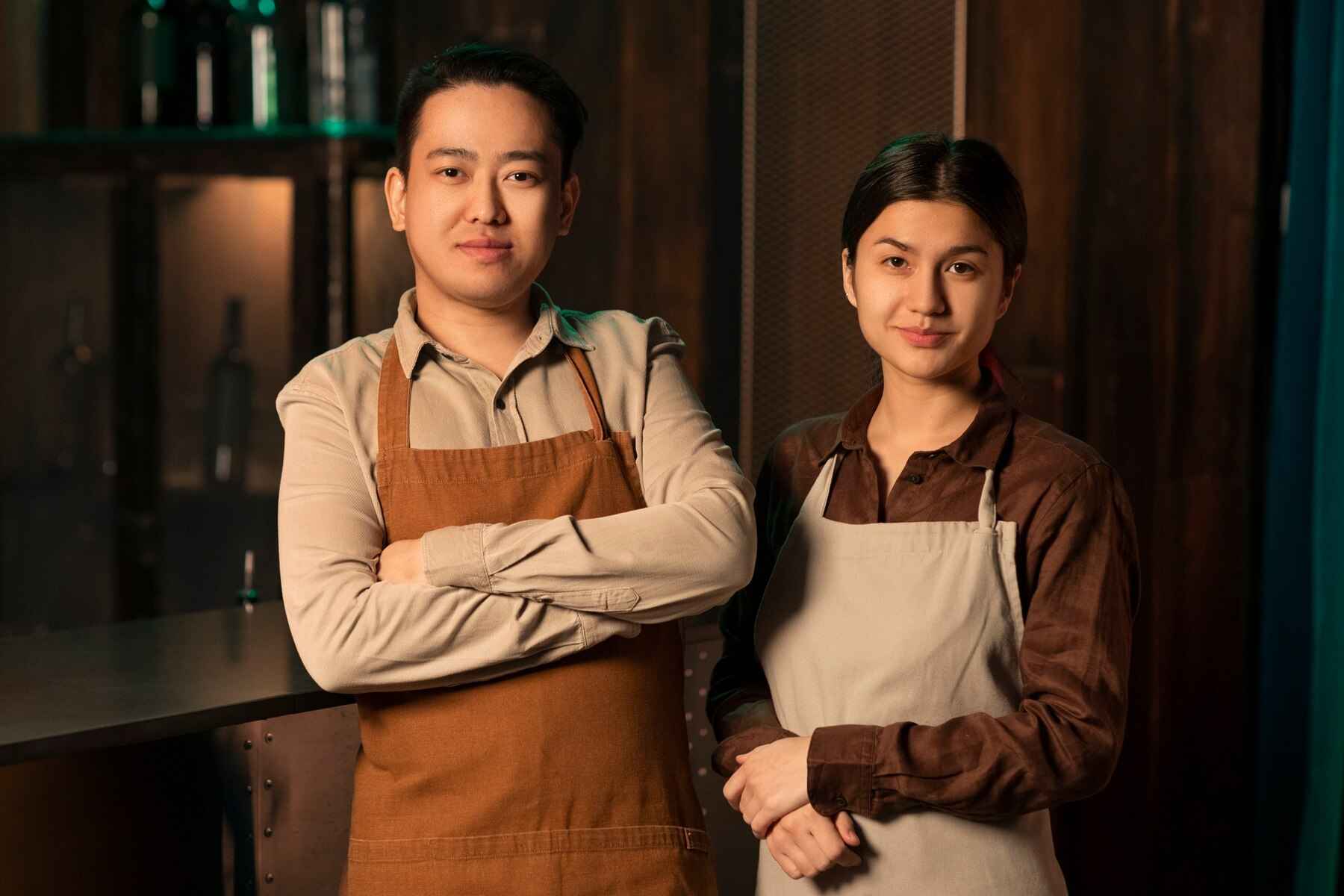
The waitress profession plays a crucial role in Indonesia’s food and beverage (F&B) industry.
Their duties go beyond serving food and drinks, they ensure that customers have an enjoyable dining experience.
As the main bridge between customers and the kitchen, waitresses help guarantee that every order is delivered quickly and accurately.
With Indonesia’s culinary business growing rapidly, the demand for skilled waitresses continues to rise.
From small cafés and family restaurants to luxury hotels, every establishment needs waitresses who are quick, friendly, and professional.
It’s no surprise that many people are interested in this profession. One of the most common questions is: How much does a waitress earn in Indonesia?
This is understandable, as salary can vary based on the workplace, working hours, and experience.
This article explores the different types of waitresses, their responsibilities, and the salary range across various culinary sectors.
Types of Waitresses Based on Their Duties
Not all waitresses have the same role. In a restaurant or café, they can be categorized based on their specific tasks and positions. Here are four common types of waitresses in the F&B industry:
1. Greeter
A greeter is the first person who interacts with customers. Their main task is to welcome guests warmly, ask for the number of people in their party, and guide them to available tables.
This role is crucial, as it creates the first impression of the restaurant’s service. Greeters also often manage the waiting list during busy hours. A polite and communicative greeter can significantly enhance customer satisfaction.
2. Taking Order
Waitresses in this position are responsible for taking customer orders. They must have a strong understanding of the menu so they can answer questions about food and beverages.
Speed and accuracy are essential. The waitress must ensure that orders are correctly sent to the kitchen to avoid mistakes during service. In some establishments, they also handle customer payments after dining.
3. Food Checker
A food checker ensures that every dish leaving the kitchen matches the customer’s request. This role requires high attention to detail, from doneness levels and additional toppings to proper presentation.
In larger restaurants, this position is often separated to make the service process more efficient and reduce errors.
4. Runner
A runner delivers food and beverages from the kitchen to customers’ tables. Though it may seem simple, this job demands good coordination and speed. Runners must maintain cleanliness, punctuality, and stability to ensure that dishes are served in optimal condition.
In smaller cafés, this role is often combined with taking orders, especially when there are fewer staff members.
Main Duties and Responsibilities of a Waitress
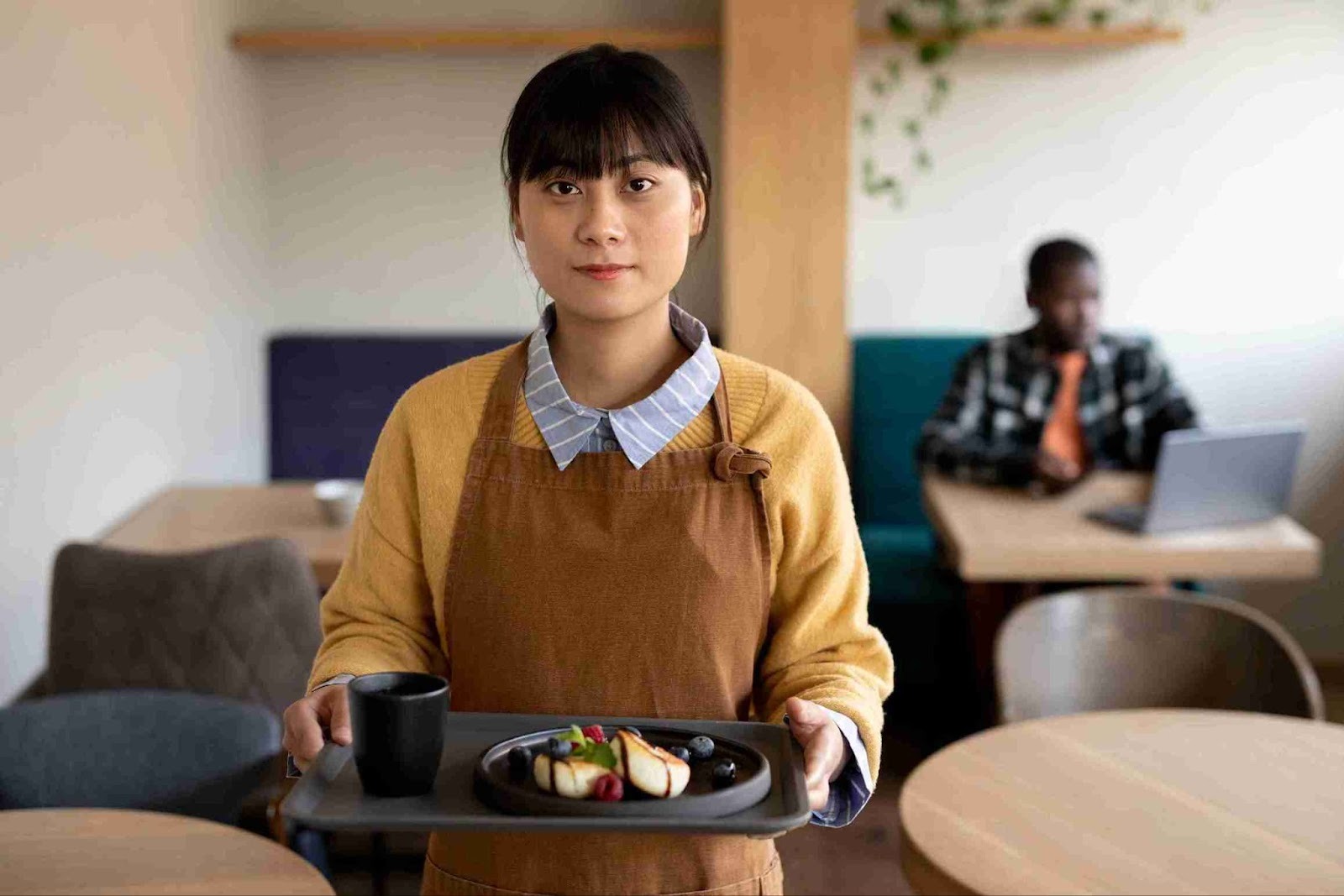
Source: freepik.com
Generally, a waitress plays an essential part in creating a comfortable dining experience. Below are the main responsibilities of a waitress:
- Greeting and guiding customers to available tables.
- Presenting menus and explaining food recommendations when needed.
- Taking orders and delivering them to the kitchen or cashier.
- Serving food and beverages according to the order sequence.
- Checking on customer satisfaction during the meal.
- Clearing tables after customers finish dining.
- Managing payments accurately.
- Keeping the work area clean and ensuring tables are ready for the next guests.
In addition to technical skills, a waitress must have good communication skills, a friendly attitude, and the ability to work under pressure. Speed and accuracy are key to providing excellent service.
Read more: What is a Food Runner? Discover Their Crucial Role in the Restaurant Industry
SOP Differences Between Waiter & Waitress
In modern restaurant operations, the terms waiter and waitress actually refer to the same role: service staff who assist guests in the dining area. The difference lies only in gender terminology, waiter refers to male staff, while waitress refers to female staff.
However, in terms of Standard Operating Procedures (SOP), there are no differences in duties, responsibilities, or service standards between the two roles.
1. Basic Service SOP
Both waiters and waitresses must follow the same service standards, including:
- Greeting guests in a friendly and professional manner.
- Using polite and clear communication.
- Accurately taking and confirming customer orders.
- Serving food and beverages according to proper sequence and presentation standards.
- Checking customer satisfaction before and after the meal.
These standards apply universally, regardless of gender.
2. Grooming and Appearance SOP
Differences usually appear only in grooming guidelines, such as:
- Uniform designs tailored specifically for male or female staff.
- Hair grooming standards, nail cleanliness, and appropriate use of accessories.
- Wearing proper work shoes that meet safety and comfort standards.
Although certain appearance details may differ, the core principle remains the same: clean, neat, and professional presentation.
3. Ethics and Communication SOP
Both waiters and waitresses are required to:
- Maintain eye contact when speaking with guests.
- Avoid using a raised voice or inappropriate language.
- Refrain from arguing with customers.
- Immediately report complaints to a supervisor when necessary.
4. Internal Coordination SOP
In restaurant operations, both roles must:
- Coordinate effectively with the kitchen and cashier team.
- Use the POS system to input orders accurately.
- Participate in pre-shift and post-shift briefings.
- Follow established service time standards.
In conclusion, the difference between a waiter and a waitress is primarily linguistic rather than operational. In modern F&B businesses, many restaurants even use gender-neutral terms such as server or service staff to promote inclusivity.
Ultimately, what matters most is not the title, but the consistency in following SOPs and delivering excellent service to every customer.
Waitress Salary Range in Indonesia
The salary of a waitress in Indonesia varies depending on the region, type of establishment, and level of experience.
The main factor influencing wages is the local minimum wage (UMK/UMR).
Waitresses in major cities like Jakarta or Surabaya typically earn higher salaries than those in regions with lower wage standards.
On average, a waitress working in a small café earns around Rp1,800,000–Rp3,000,000 per month, while those in mid-range restaurants can earn up to Rp4,000,000 per month.
In star-rated hotels, salaries tend to be higher due to greater responsibilities and higher service standards.
For part-time café waitresses, income is usually calculated hourly, around Rp20,000–Rp30,000 per hour.
Besides the base salary, waitresses often receive tips from customers, which can significantly boost monthly earnings, especially in busy establishments.
Therefore, a waitress’s income largely depends on location, working hours, and service quality.
FAQ About Waitresses
1. What’s the difference between a full-time and part-time waitress?
A full-time waitress works fixed hours and receives a monthly salary, while a part-time waitress has flexible hours and is paid per hour or per shift.
2. What are the career prospects for a waitress?
Career opportunities are promising. With experience and good performance, a waitress can be promoted to cashier, supervisor, or even restaurant manager.
3. Is a waitress responsible for cleanliness in the dining area?
Yes. In addition to serving customers, waitresses usually help keep the dining area and tables clean to maintain customer comfort.
Read more: Understanding American Service: Presentation Style and Its Advantages
Conclusion
The waitress profession plays a crucial role in creating a pleasant dining experience for customers.
Although waitress salaries vary by region and type of establishment, this job remains a vital part of the ever-growing culinary industry.
Behind the friendly and attentive service, there’s a system that must operate efficiently to keep customers satisfied and the business competitive.
For F&B business owners, the first step to improving operational efficiency can start by transitioning to ESB’s digital ecosystem.
Through integrated systems such as POS, ERP, kiosks, online ordering, supply chain management, and customer queue systems, business management becomes easier, faster, and more efficient.
A POS system that’s directly connected to the kitchen display also helps the kitchen crew process orders more quickly and accurately.
With ESB’s technology support, culinary businesses can grow more optimally and deliver the best experience for every customer at every table.
Contact the ESB team today for consultation and digitalization solutions for your culinary business.


