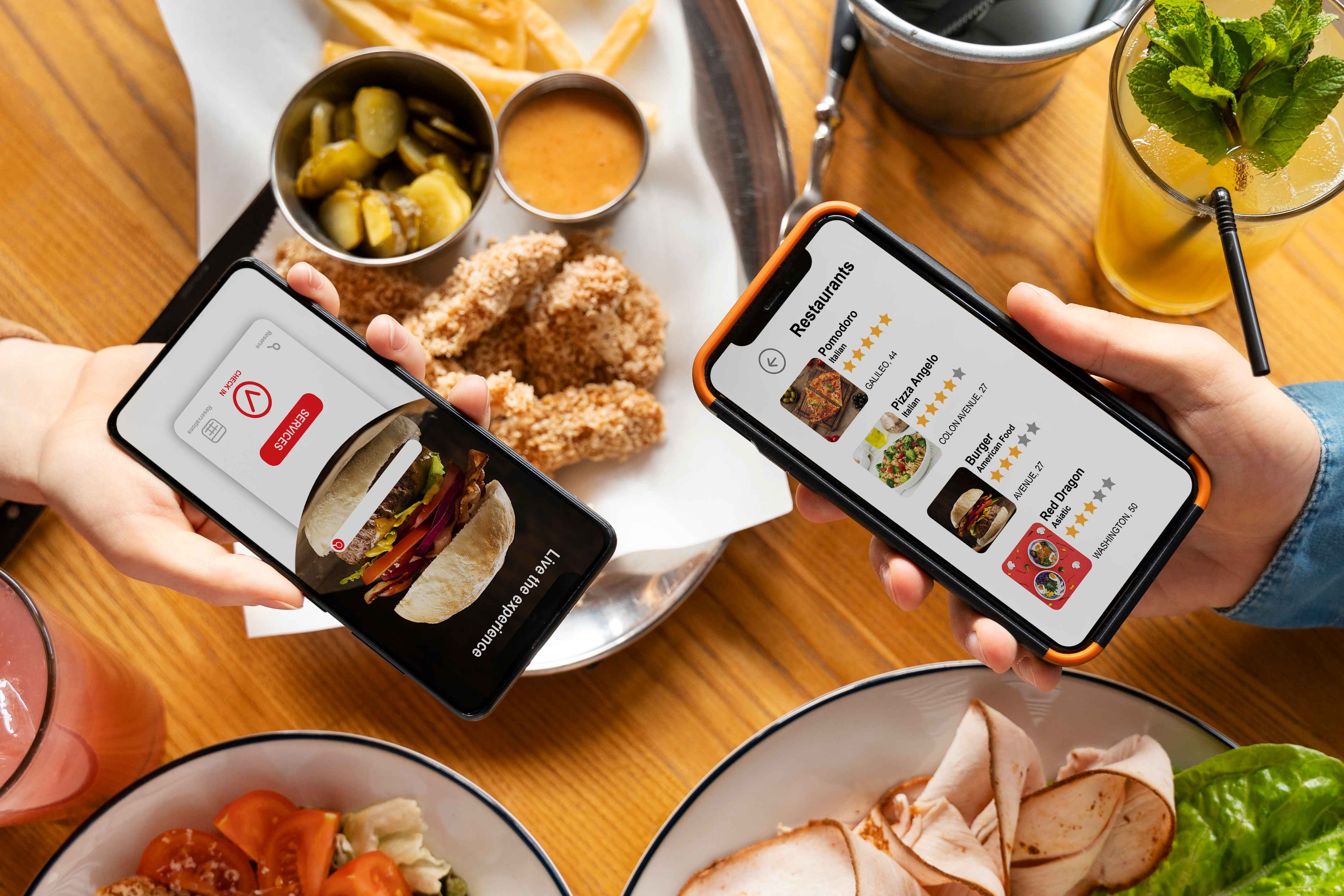
Amid a rapidly evolving culinary ecosystem, a brand’s success is no longer determined solely by taste or store aesthetics.
Entering 2026, competition has shifted deeper into the digital realm—specifically, how well your brand can truly own its customers through an F&B business website, rather than relying entirely on third-party platforms.
We all agree that third-party platforms, such as food delivery apps, have been heroes for MSMEs, helping them survive and grow.
However, for businesses entering a scale-up phase, relying fully on third-party channels can become a double-edged sword.
Many founders and decision makers are beginning to realize that to build a sustainable business empire, they cannot keep “renting” digital storefronts forever.
This is where building your own brand website or application becomes essential—as a strong foundation for a resilient owned channel.
The Risk of Being Trapped in Third-Party Ecosystems
As order volumes increase, dependence on third-party platforms often creates strategic issues that are rarely apparent at the beginning.
Before discussing solutions, let’s break down the challenges that often cause mid-to-large-scale operations to stagnate.
1. Heavy Dependence on Platform Algorithms and Commissions
Third-party platforms operate on algorithms that can change at any time. Today, your brand may appear at the top; tomorrow, it could disappear simply due to internal policy changes.
In addition, high commission fees become increasingly burdensome as raw material and operational costs rise.
These deductions significantly affect your profit margins.
2. Limited Control Over Customer Data
Who are your loyal customers? What are their favorite menus on weekdays versus weekends? What is their average monthly spend?
If you rely solely on third-party platforms, this valuable data belongs to the platform—not to you.
Without access to customer behavior data, you lose the ability to personalize services and run effective marketing campaigns.
3. Uniform Brand Experience
On delivery platforms, your brand visuals must conform to standardized formats shared with thousands of competitors.
Culinary brands struggle to express their unique identity when their digital storefront lacks distinctive character.
Control over user experience (UX) is very limited, even though first impressions during digital ordering strongly influence customer loyalty.
4. Difficulty in Building Long-Term Strategies
Without your own channel, you lack a permanent “home” to host new product innovations, loyalty programs, and special campaigns.
As a result, brands tend to react to platform-driven promotions instead of proactively building their own business ecosystem.
Read more: Tips to Scale Up Your Online Frozen Food Business with Organized Stock and Shipping Management
The Benefits of Owning an F&B Business Website and App
Building your own website or app is not just about following digitalization trends—it is an investment in owned channels.
Below are strategic reasons why owned channels are key to successful scaling.
1. Full Ownership of Customer Data
Having your own app or website means full control over your customer database.
With POS system integration, online and offline transaction data can be synchronized.
This data enables highly personalized remarketing offers, helping increase customer retention without heavy additional advertising costs.
2. Building Loyalty Through Exclusive Memberships
Major brands such as Fore Coffee and Re.juve have proven that standalone F&B brand apps are powerful loyalty engines.
They retain customers through point systems, membership tiers, and app-exclusive promotions.
This strategy creates an ecosystem where customers feel they lose value if they buy elsewhere, since their accumulated points only apply within the brand’s official channels.
3. Full Control Over Product Catalogs
Do you want to sell bottled drinks, frozen food packages, or exclusive merchandise?
Your own website gives you flexibility to showcase non-outlet products more freely.
You can design your own bundling strategies to increase revenue without being constrained by rigid third-party category rules.
4. Long-Term Cost Efficiency
Although initial development requires investment, per-transaction costs on owned channels are significantly lower than third-party platform commissions.
The margin difference can be allocated to service improvements, new product development, or faster outlet expansion.
How to Manage Orders from Your Own Website
The biggest challenge of owning an F&B website or app is often: “How do we manage orders efficiently?”
For culinary business networks with multiple outlets, order management requires data alignment across production areas, stock availability, and distribution flows to customers.
This is where a digital ecosystem plays a critical role.
1. Integration with POS (Digital Cashier Systems)
Orders from the website must automatically enter the POS System at the nearest outlet so kitchen teams can process them immediately.
Systems like ESB help ensure raw material stock is deducted automatically and financial reports are recorded centrally—without manual input.
2. Distribution and Delivery Management
Challenges arise when website orders require flexibility in courier selection.
This is where Biteship acts as a logistics aggregator, providing shipping and fulfillment services that support F&B brand operations by managing deliveries more efficiently through a single integrated dashboard.
Strategic Steps to Start an Owned Channel for Culinary Businesses
If you look at major brands under the Ismaya Group or health beverage pioneers like Re.juve, they use third-party platforms as acquisition tools to attract new customers.
Gradually, however, they direct customers to transact through their own apps by offering loyalty points or exclusive menus.
This is a smart strategy to “secure” customer bases from external platform algorithm changes, while maintaining control over quality and logistics.
For business owners ready to build their own website or app, start with these practical steps:
1. Audit data readiness
Ensure your internal operational systems (such as POS) are ready for digital integration.
2. Choose a scalable platform
Select developers or platforms capable of handling order spikes and integrating easily with logistics systems.
3. Define your value proposition
Give customers clear reasons to order from your website—such as first-order discounts, exclusive products, or easy delivery tracking.
4. Prepare logistics infrastructure
Partner with delivery services that can adapt to varied routes and order volumes to maintain product quality until it reaches customers.
Read more: Have Multiple Culinary Branches? Here’s How to Manage Distribution So It Stays Organized
Build Your Own Business Website as a Long-Term Investment
Building an F&B business website is a long-term investment that gives you full control over data, customer loyalty, and profit margins.
Ultimately, the brands that win the market are not just those with the best recipes, but those that understand their customers best.
The combination of ESB’s internal operational systems and Biteship’s logistics technology helps transform your business from a platform renter into the owner of a strong digital ecosystem.
Focus on your product quality—let the system take care of operational efficiency.


