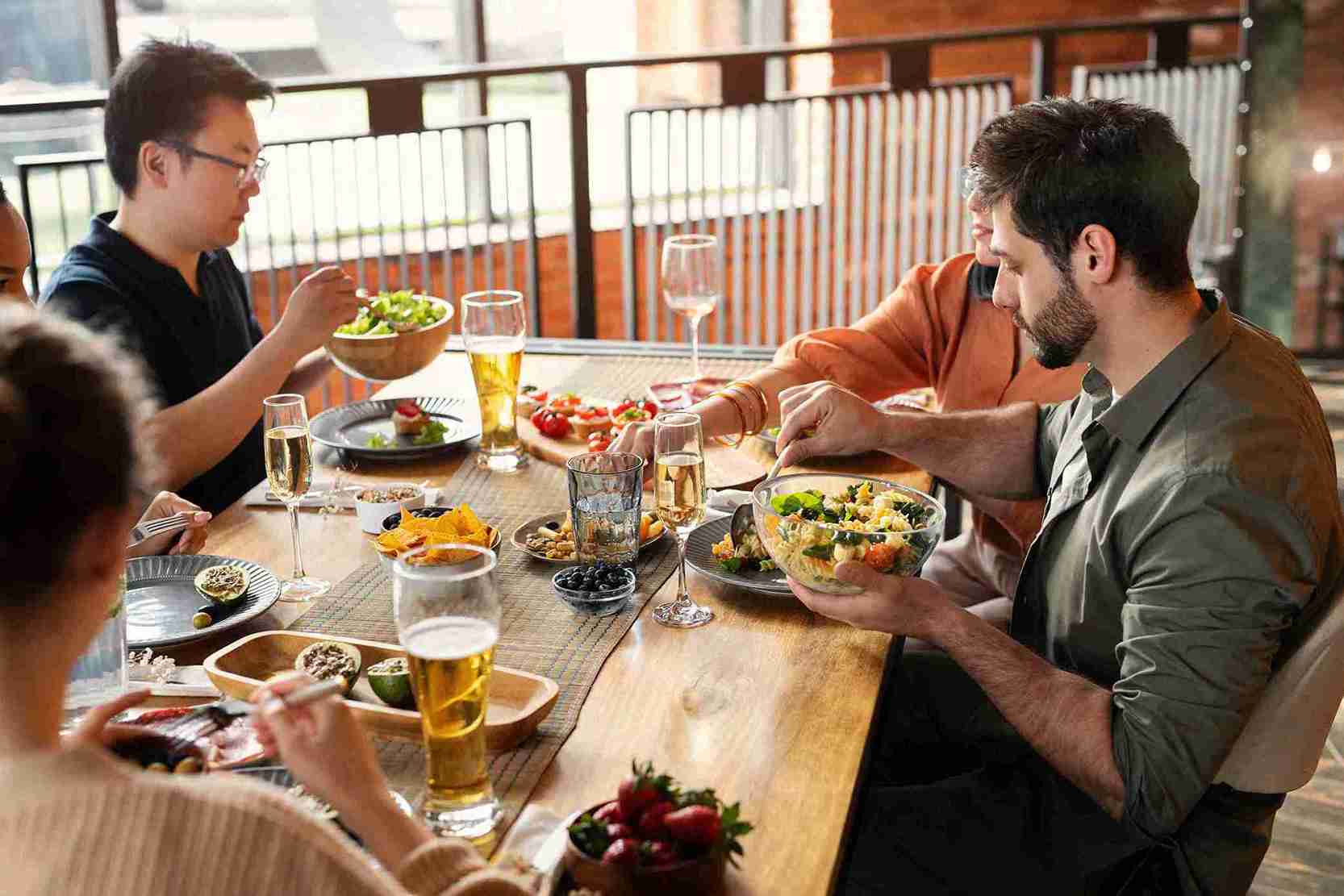
Walk-in means guests who come directly to a restaurant without making a reservation in advance.
This concept has long been recognized in the hospitality industry and has become an essential part of modern restaurant operations.
Amid increasingly intense competition in the culinary business, understanding the characteristics of walk-in customers is not just about welcoming unexpected guests, but also about managing them effectively to remain profitable.
Many restaurants rely on walk-ins as their primary source of daily transactions. However, without the right strategy, sudden surges in guests can lead to long queues and decreased service quality.
Therefore, it is important to fully understand the walk-in concept, including how it differs from reservations and the optimal strategies for managing it.
What Is a Walk-In Restaurant?
A walk-in restaurant refers to customers who come directly to dine without booking a table beforehand.
They arrive spontaneously, wait if no table is available, and enjoy the service once they are seated. This concept is very common in casual dining restaurants, cafés, and family dining establishments.
From a managerial perspective, walk-in guests are often referred to as regular or general guests because most restaurant visitors typically do not make prior reservations.
Unlike hotels, which tend to rely on advance bookings, restaurants often deal with fast-changing and dynamic daily traffic patterns.
The Difference Between Walk-Ins and Reservations in Restaurants
Both walk-ins and reservations play important roles in attracting customers, but they involve different approaches to table management and business strategy.
Understanding these differences helps restaurants determine the right service composition based on their concept and target market.
1. In Terms of Booking Time
In a walk-in system, customers arrive without prior notice, so restaurants must be ready to accommodate guests at any time during operating hours.
There is no certainty about how many guests will arrive at a specific time, making capacity management more dynamic.
In contrast, reservations are made before the visit date or time, allowing restaurants to anticipate the number of guests and prepare in a more structured manner.
2. In Terms of Table Availability Certainty
Walk-ins depend entirely on table availability at the time of arrival. If the restaurant is full, customers must wait or potentially choose another venue.
Reservations, on the other hand, guarantee seating because tables are prepared according to the scheduled time. This certainty is especially important for large groups or special occasions.
3. In Terms of Sales Strategy
Walk-ins rely on natural traffic and spontaneous customer decisions. The strategy typically focuses on fast service and optimizing table turnover.
Reservations are often combined with promotional programs such as early bird offers or special packages to encourage advance bookings.
This approach allows restaurants to secure part of their revenue even before the operating day begins.
Read more: Understanding Restaurant Reservations, Their Benefits, and How to Manage Them Effectively
Why Do Many Restaurants Rely on Walk-Ins?
Many culinary business owners prioritize walk-ins because they provide high operational flexibility. Without being tied to reservation schedules, all tables can be utilized optimally according to guest arrival order.
This system also reduces the risk of no-shows, where guests make reservations but fail to arrive.
Empty tables due to last-minute cancellations can lead to lost revenue opportunities. With walk-ins, tables are immediately assigned to guests who are physically present.
Additionally, restaurants located in strategic areas such as shopping centers or office districts usually experience steady customer traffic.
In such situations, walk-ins become a primary strength because visit volumes tend to be relatively consistent.
Advantages of Walk-Ins for Restaurant Businesses
When managed properly, walk-ins can become a strong revenue driver. Here are some of the main advantages:
1. Increasing Table Turnover
Without being tied to reservation schedules, restaurants can manage seating more dynamically. Empty tables can immediately be filled by the next guests, increasing the turnover rate.
2. Maximizing Peak Hours
For example, if data shows that Friday evenings are consistently busy, restaurants can prepare additional staff and higher stock levels to anticipate walk-in surges.
By utilizing historical sales data, walk-in volume can be predicted more accurately, making operations better prepared.
3. Creating Upselling Opportunities
Walk-ins are often spontaneous. Customers who initially plan to eat quickly may be tempted to add more items due to staff recommendations or digital system suggestions.
This is where technology plays a crucial role. A digital ordering system with automated recommendations can help increase the average transaction value per guest.
Disadvantages of Walk-Ins That Need to Be Anticipated

Source: freepik.com
Although they appear profitable, relying entirely on walk-ins also carries certain risks.
1. Sudden and Unpredictable Surges
Sometimes, a large number of walk-ins may arrive simultaneously while existing reservations are also scheduled. This situation can overwhelm staff, slow down service, and increase the risk of errors.
When kitchen and service teams operate under high pressure, the overall dining experience may decline.
2. Instability for New Restaurants
Relying solely on walk-ins is usually insufficient for restaurants that have not yet built a strong reputation. Without consistent promotional and reservation strategies, guest volume may fluctuate significantly.
Well-established restaurants may survive with a walk-in-only model, but for growing businesses, combining reservations and walk-ins is generally safer.
3. Risk of Long Queues
When capacity is full, walk-in guests must wait. If waiting times are too long and poorly managed, customers may cancel their plans and choose another restaurant.
Strategies to Manage Walk-Ins Profitably
To prevent walk-ins from becoming a source of operational challenges, restaurants need well-planned strategies. Here are several approaches that can be implemented:
1. Use Data to Predict Volume
Analyzing daily and weekly sales helps map customer visit patterns. Based on this data, staff schedules and ingredient preparation can be adjusted accordingly.
2. Combine Walk-Ins and Reservations
Instead of choosing only one system, combining both can be more effective. For example, 70% of capacity can be allocated to walk-ins and 30% to reservations.
This strategy provides both flexibility and revenue certainty.
3. Implement a Digital Waiting List System
A transparent and well-organized queue system makes customers feel more comfortable even when waiting. Digital systems also help speed up order input once tables become available.
4. Optimize the Ordering System
Service speed is key in managing walk-ins. The faster the ordering process, the quicker tables can turn over.
A digital ordering system with automated recommendations can accelerate order time while increasing transaction value.
Read more: What is Open Table? Meaning and Benefits for Restaurant Businesses
FAQ About Walk-In Restaurants
1. What does walk-in mean in a restaurant context?
Walk-in means customers who come directly to the restaurant without making a prior reservation. They arrive spontaneously and are served based on table availability at that time.
2. Can a restaurant operate with a walk-in-only system?
Yes. Some restaurants implement a walk-in-only system with a first-come, first-served concept. However, this strategy is usually more suitable for high-traffic restaurants or those with a strong customer base.
3. What is the biggest challenge in managing walk-ins?
The main challenge is sudden guest surges that can overwhelm kitchen and service teams. Without proper staff planning and efficient systems, service quality may decline.
4. How can restaurants reduce long queues caused by walk-ins?
Restaurants can implement a digital waiting list system to make queues more organized and transparent. Additionally, a fast ordering system helps accelerate table turnover and shorten waiting times.
5. Are walk-ins more profitable than reservations?
The profitability of walk-ins depends on the restaurant’s concept and target market. For high-volume restaurants, walk-ins can be highly profitable due to flexibility and minimal no-show risk. However, combining walk-ins and reservations is often the most stable strategy to maintain balanced revenue.
Conclusion
Walk-in means guests who come directly without reservations, and this concept forms a key foundation of modern restaurant operations.
With data-driven management, the right combination of reservations, and efficient systems, walk-ins can increase table turnover while boosting revenue.
On the other hand, without proper planning, sudden guest surges may reduce service quality and customer experience.
To maximize walk-in potential while managing various promotions such as early bird offers, restaurants need an integrated system.
ESB Order is an online food ordering solution proven to increase transactions by up to 60% through AI-powered recommendations, low commission fees of only Rp1,000 per bill, and integration with various digital payments, vouchers, and membership or loyalty programs.
The ordering process is also 40% faster than manual systems and allows restaurants to manage multiple promotional types within a single dashboard, making both walk-in and reservation management more optimal.
Contact the ESB team today and take advantage of ESB Order to grow your culinary business!


