In the business world, clear and professional communication is the key to gaining the trust of potential customers. One form of communication that is often used is a price quotation letter.
This document is not just a list of prices, but also a representation of how your business builds a convincing first impression.
Many business owners still consider this letter as a mere formality. In fact, proper preparation can be a determining factor in whether a potential client will proceed with a partnership or not.
From the language used to the details of the information presented, everything plays an important role.
In this article, we will discuss everything in detail, starting from the definition, functions, structure, to price quotation examples that you can directly use as references.
With the right understanding, you can create a quotation letter that is not only informative but also capable of increasing your chances of closing deals.
What Is a Price Quotation Letter?
A price quotation letter is an official document created by a seller or service provider to offer products or services to potential customers.
The main content of this letter includes information related to pricing, product or service specifications, as well as applicable terms and conditions.
Usually, this letter is sent after a request from a potential client or as an initiative to open up opportunities for collaboration.
In practice, price quotation letters are also commonly used in tender processes, business partnerships, and project proposals.
More than just a price list, this document also functions as a communication tool that reflects business professionalism.
With a well-structured format and clear information, potential customers can more easily understand the value being offered.
Why Do Companies Create Price Quotation Letters?
There are several reasons why price quotation letters are an important part of business processes. One of them is to provide official pricing information.
With a written document, both parties have a clear reference regarding the costs being offered, minimizing the potential for misunderstandings.
In addition, a price quotation letter plays a role in building trust. A well-prepared and professional document shows that your business is serious about establishing cooperation and capable of delivering reliable services.
This letter is also often used as a negotiation tool. In many situations, the content of the quotation becomes the basis for further discussions, whether related to pricing, product specifications, or the scope of services offered.
On the other hand, a price quotation letter also supports business administrative processes.
This document is often used as an attachment in contracts or cooperation agreements, making record-keeping and archiving more structured.
Structure and Contents of a Price Quotation Letter
Before creating one, it is important to understand the essential components that must be included in a price quotation letter. A clear structure will make it easier for the recipient to understand the content of the offer.
1. Letterhead
The letterhead contains the company’s identity, such as the business name, address, contact number, and logo. This section is important to show credibility and make it easier for the recipient to contact you.
A professional letterhead makes the quotation letter look more official and trustworthy. It also helps strengthen your business branding.
2. Letter Number and Date
The letter number serves as the document’s identity for archiving purposes, while the date indicates when the quotation was created.
Both elements are important to ensure the document is easy to track and remains relevant, especially if the quotation has a validity period.
3. Recipient Information
This section states who the letter is addressed to, usually including the name of the company or individual recipient.
Clear and precise writing will make the letter feel more personal and professional compared to overly general wording.
4. Opening Greeting
The opening greeting is used to begin communication politely. Although simple, this section helps create a positive first impression.
Use language that is professional yet friendly to make the communication feel more approachable.
5. Offer Details
This is the main part of the letter. Here, you need to explain the products or services offered in detail, including specifications, quantity, and price.
Make sure the information is presented clearly and not confusing. If necessary, use tables to improve readability.
6. Terms and Conditions
This section includes additional information such as payment methods, delivery time, quotation validity period, and other policies.
By including terms and conditions, you can avoid misunderstandings in the future.
7. Closing
The closing contains expressions of hope for cooperation as well as an invitation to discuss further.
Use polite sentences that show readiness to answer questions or engage in negotiations.
8. Signature and Full Name
The final section includes the signature along with the sender’s name and position.
This serves as a form of validation that the letter is official and accountable.
Read more: Want to Look Professional? Check Out These Examples of Company Letterheads in Word That You Can Use!
How to Create an Effective Price Quotation Letter
Creating a price quotation letter cannot be done carelessly. There are several strategies you can apply to make it more effective and appealing:
1. Use Clear and Easy-to-Understand Language
Avoid using overly technical or confusing terms. Use simple yet professional language so that your message is well conveyed.
With clear language, potential customers do not need to guess the meaning of your offer.
2. Highlight Value, Not Just Price
Do not focus solely on numbers. Explain the benefits or advantages of the products and services you offer.
This way, potential customers can see the value they will receive, not just the cost they have to pay.
3. Organize a Neat Format
A well-structured appearance makes the letter easier to read. Use a clear structure and avoid overly long paragraphs.
If possible, use bullet points or tables to present important information.
4. Customize for the Target Recipient
Each client has different needs. Try to tailor the content of the letter according to their requirements.
A personalized approach will make the offer feel more relevant and increase the chances of acceptance.
5. Include a Call to Action
Guide the recipient on what to do next, such as contacting you or scheduling a meeting.
A clear call to action helps accelerate communication and the closing process.
Examples of Individual Price Quotation Letters
Here are some price quotation examples that you can use as references for various business needs:
1. Example of Office Supplies Price Quotation Letter

Source: dealls.com
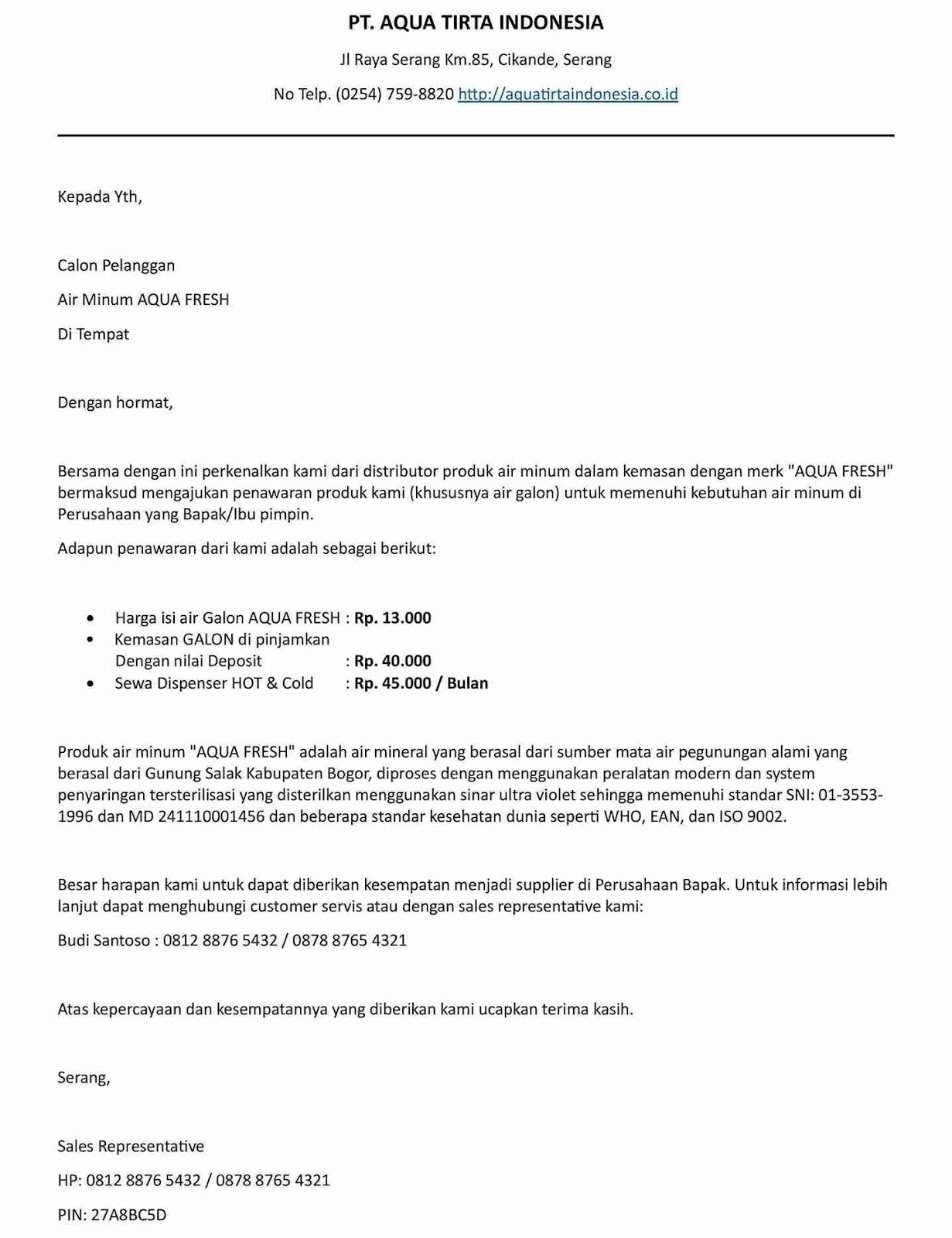
2. Example of Bottled Drinking Water Price Quotation Letter
Source: dealls.com
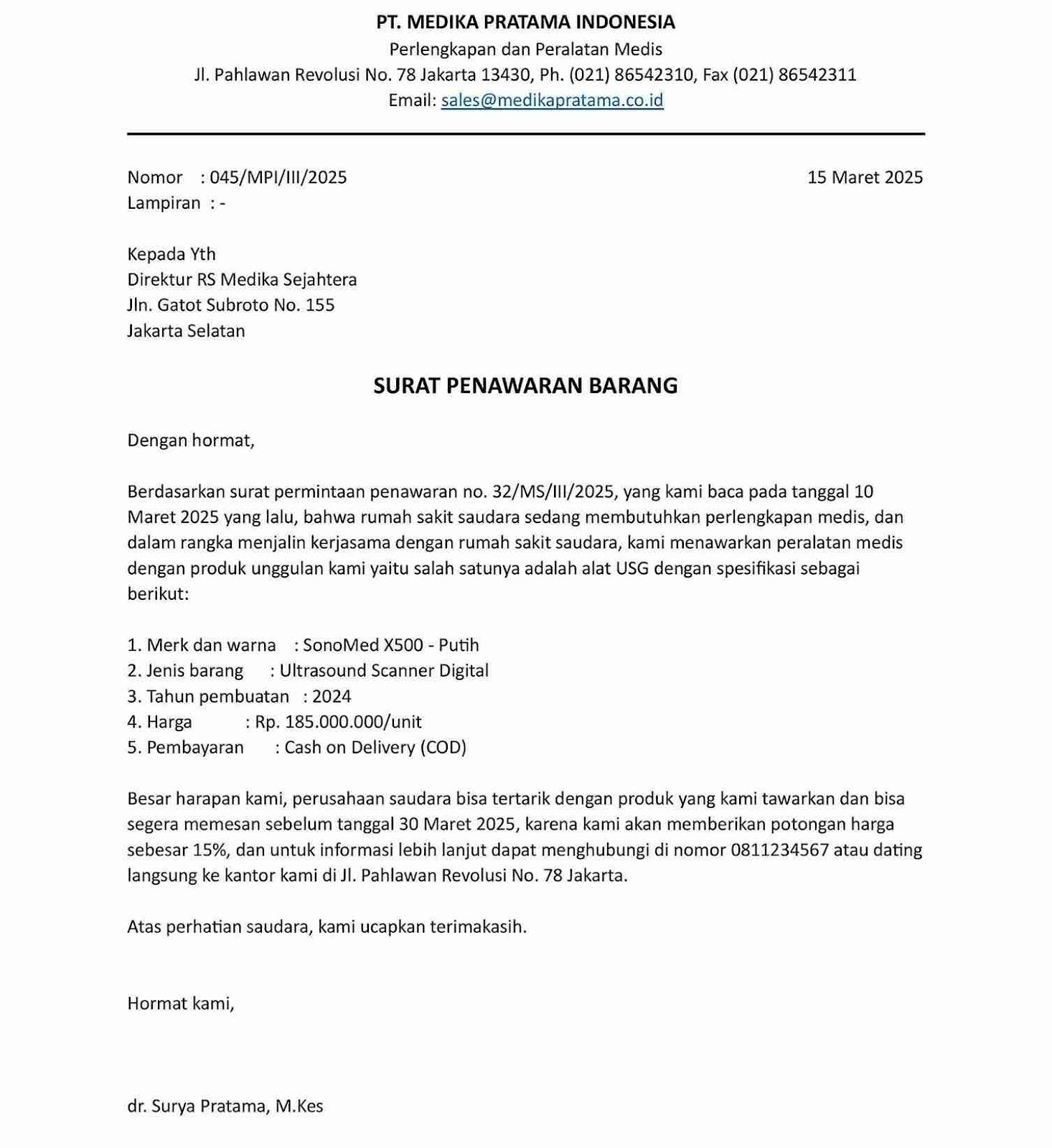
3. Example of Medical Equipment Price Quotation Letter
Source: dealls.com
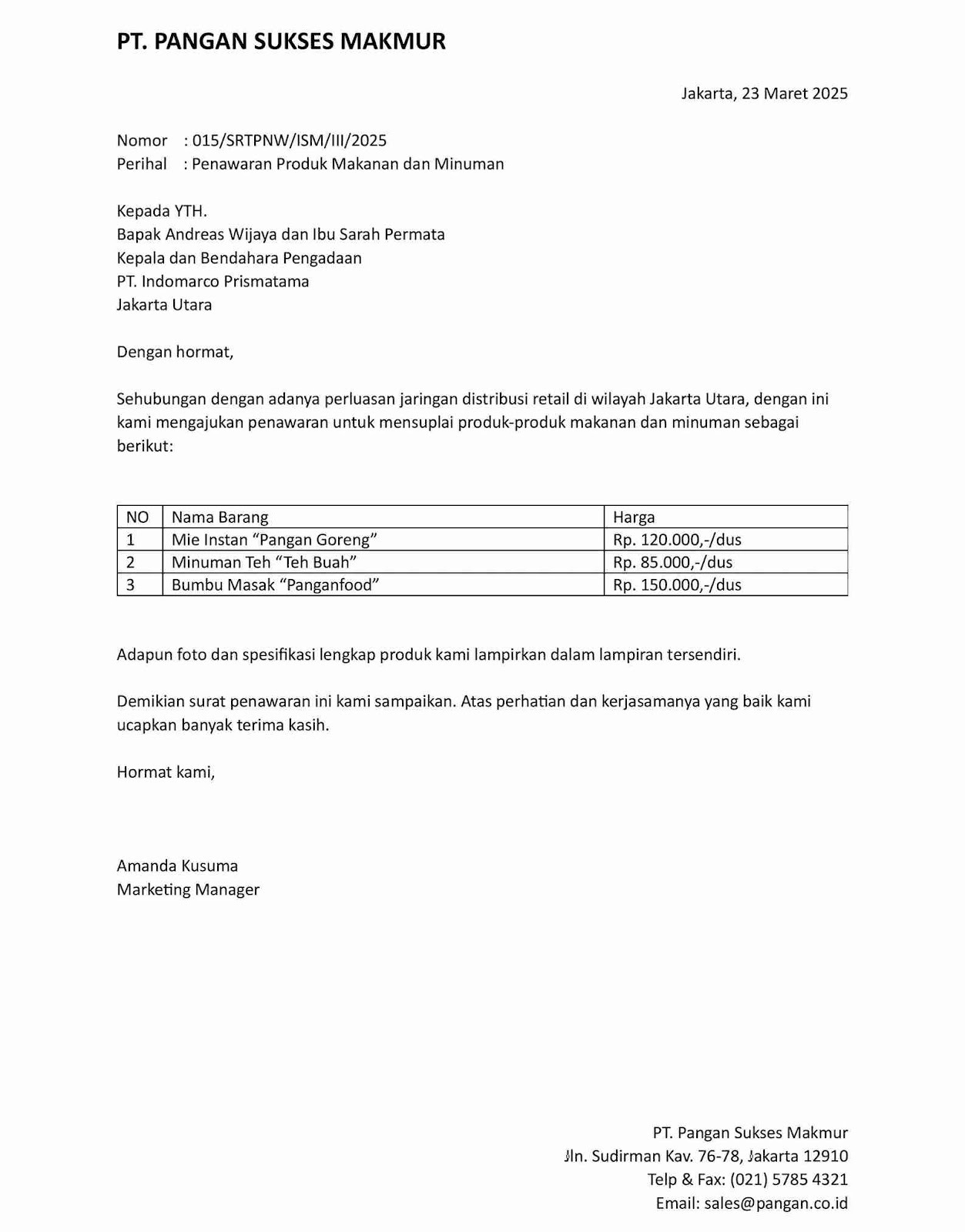
4. Example of Food and Beverage Product Price Quotation Letter
Source: dealls.com
5. Example of Material Supply Price Quotation Letter
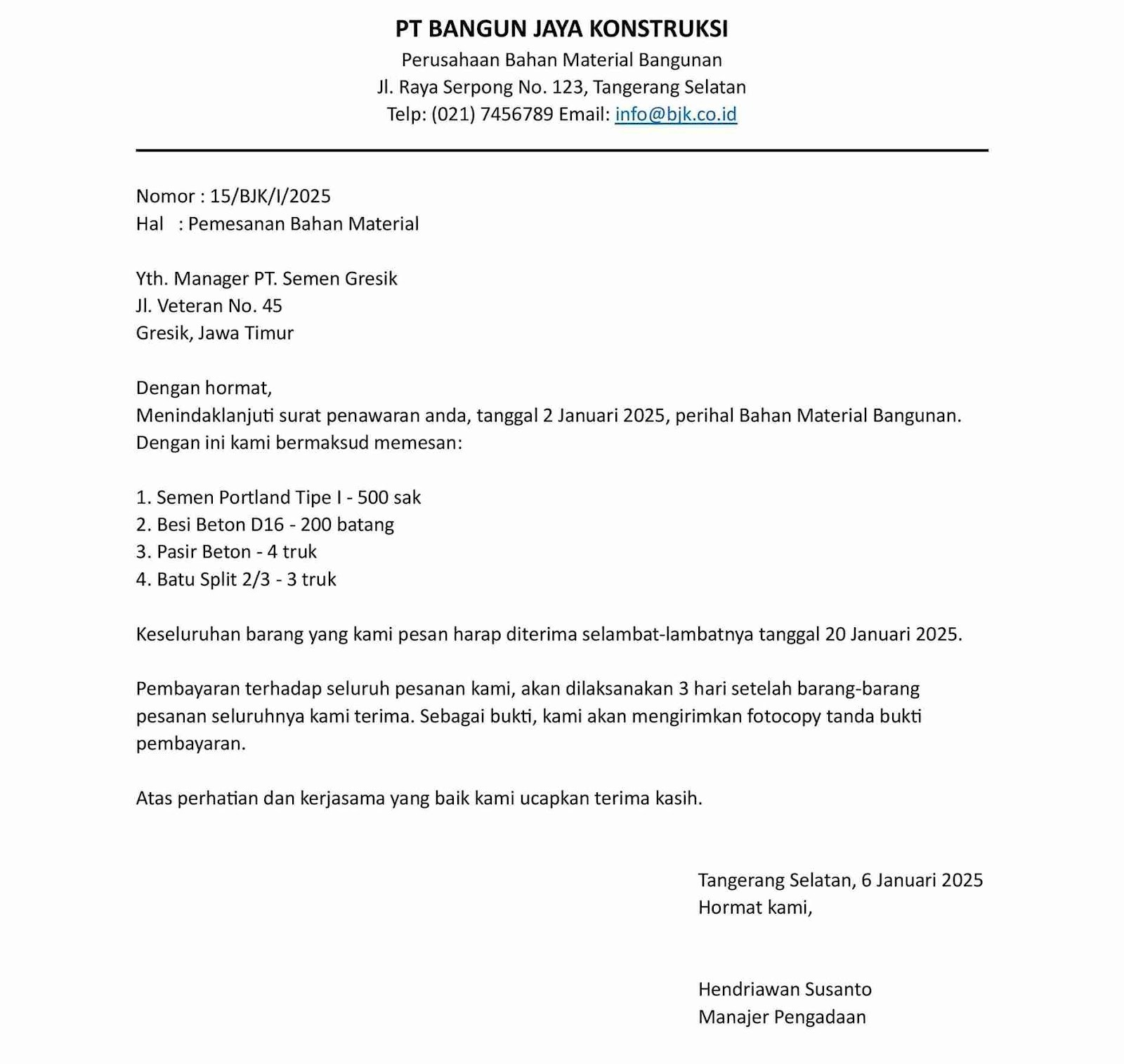
Source: dealls.com
6. Example of Event Organizer Service Price Quotation Letter
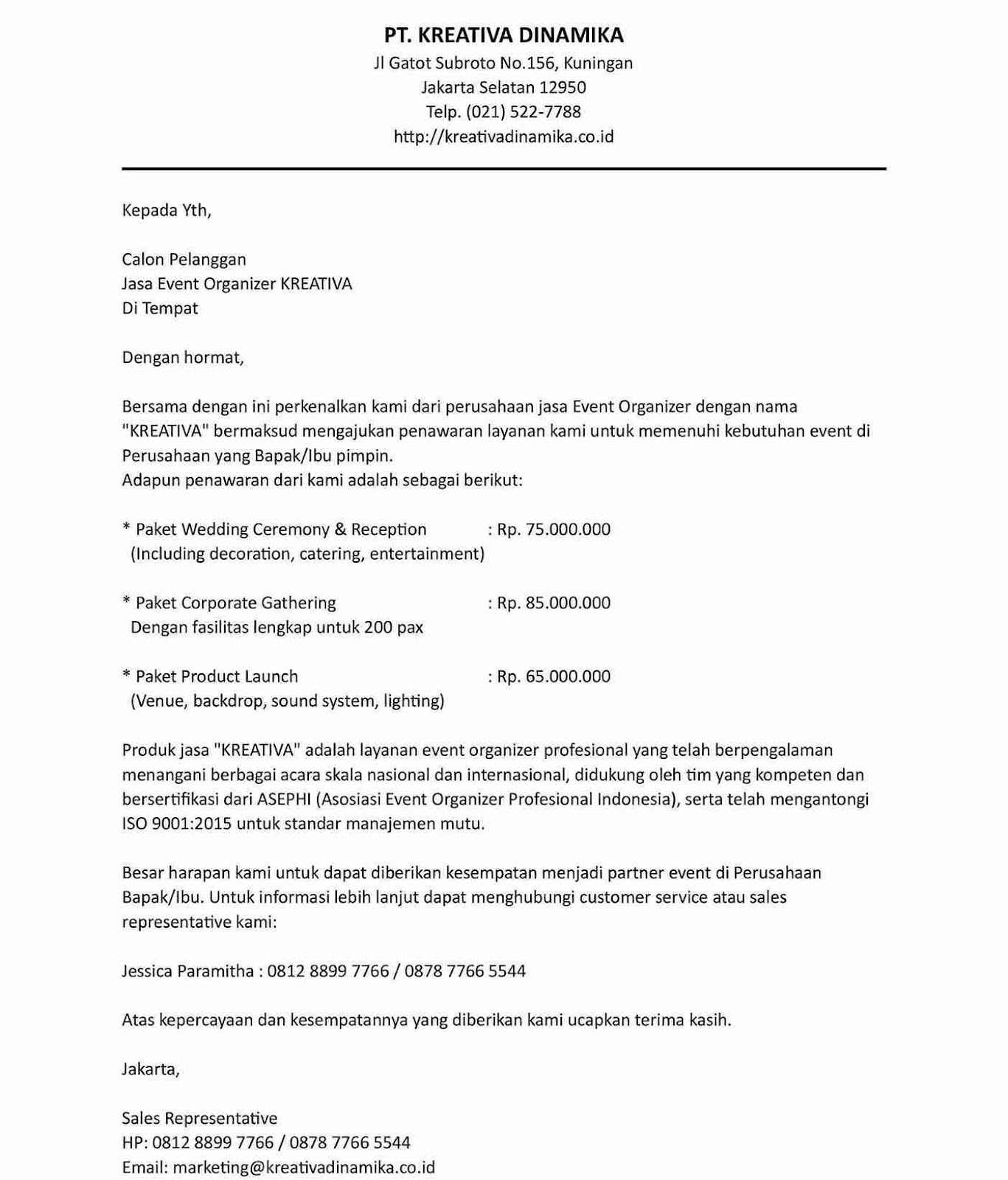
Source: dealls.com
7. Example of Project Price Quotation Letter

Source: scribd.com
8. Example of Goods Price Quotation Letter
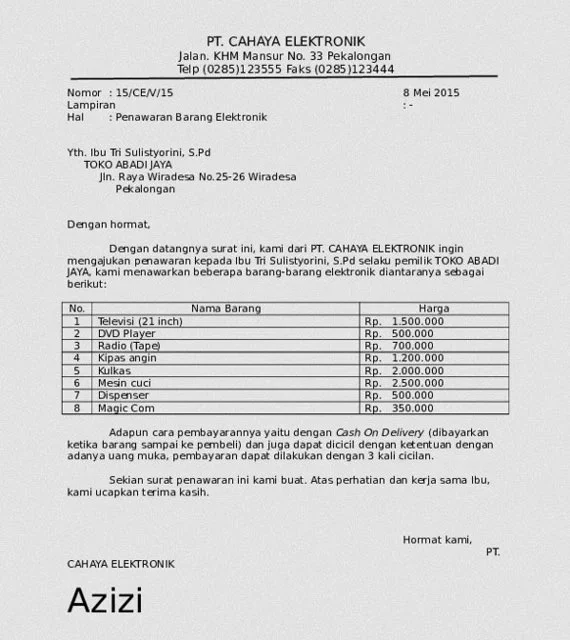
Source: accurate.id
9. Example of Service Price Quotation Letter
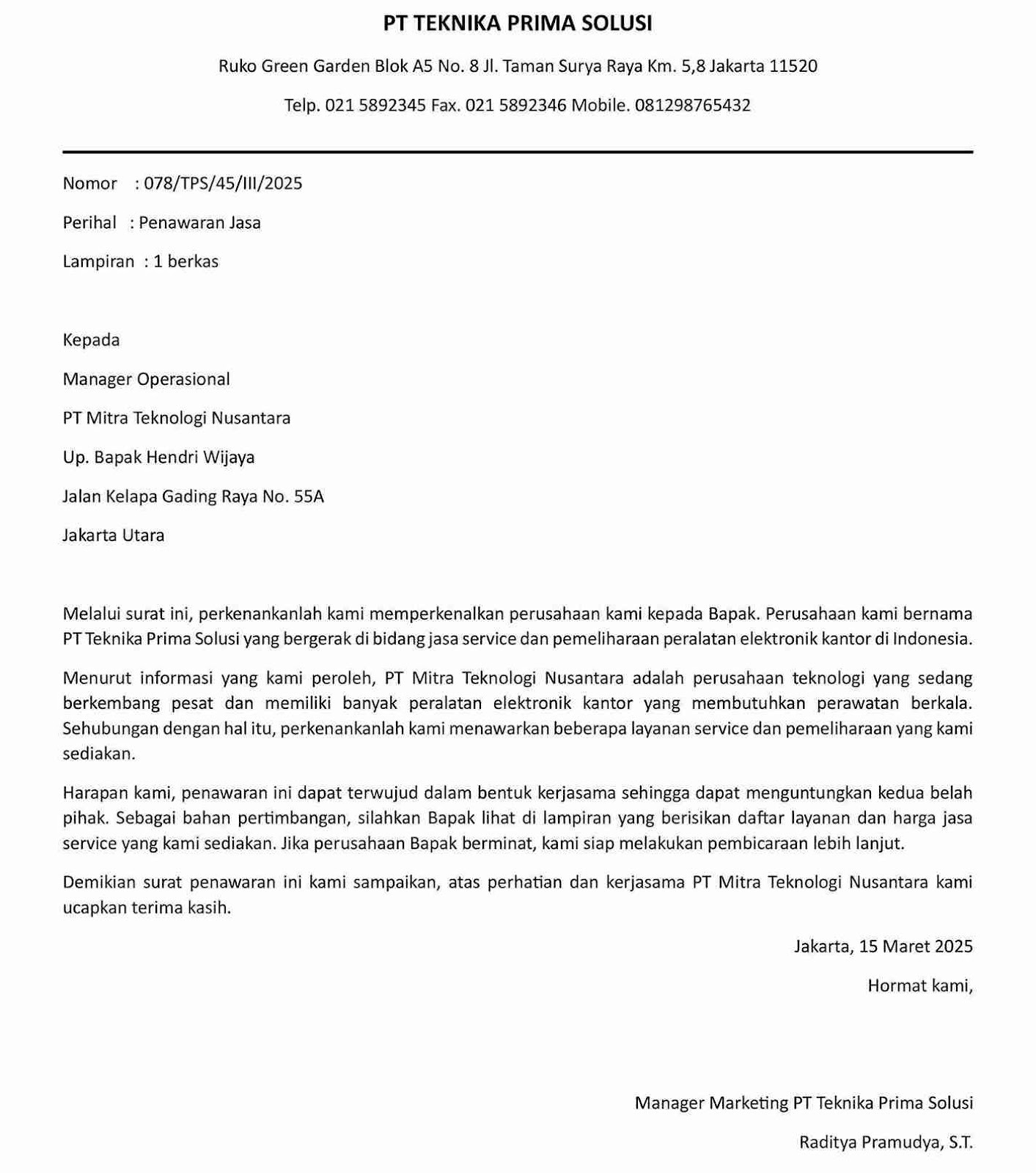
Source: scribd.com
10. Example of Construction Lump Sum Price Quotation Letter
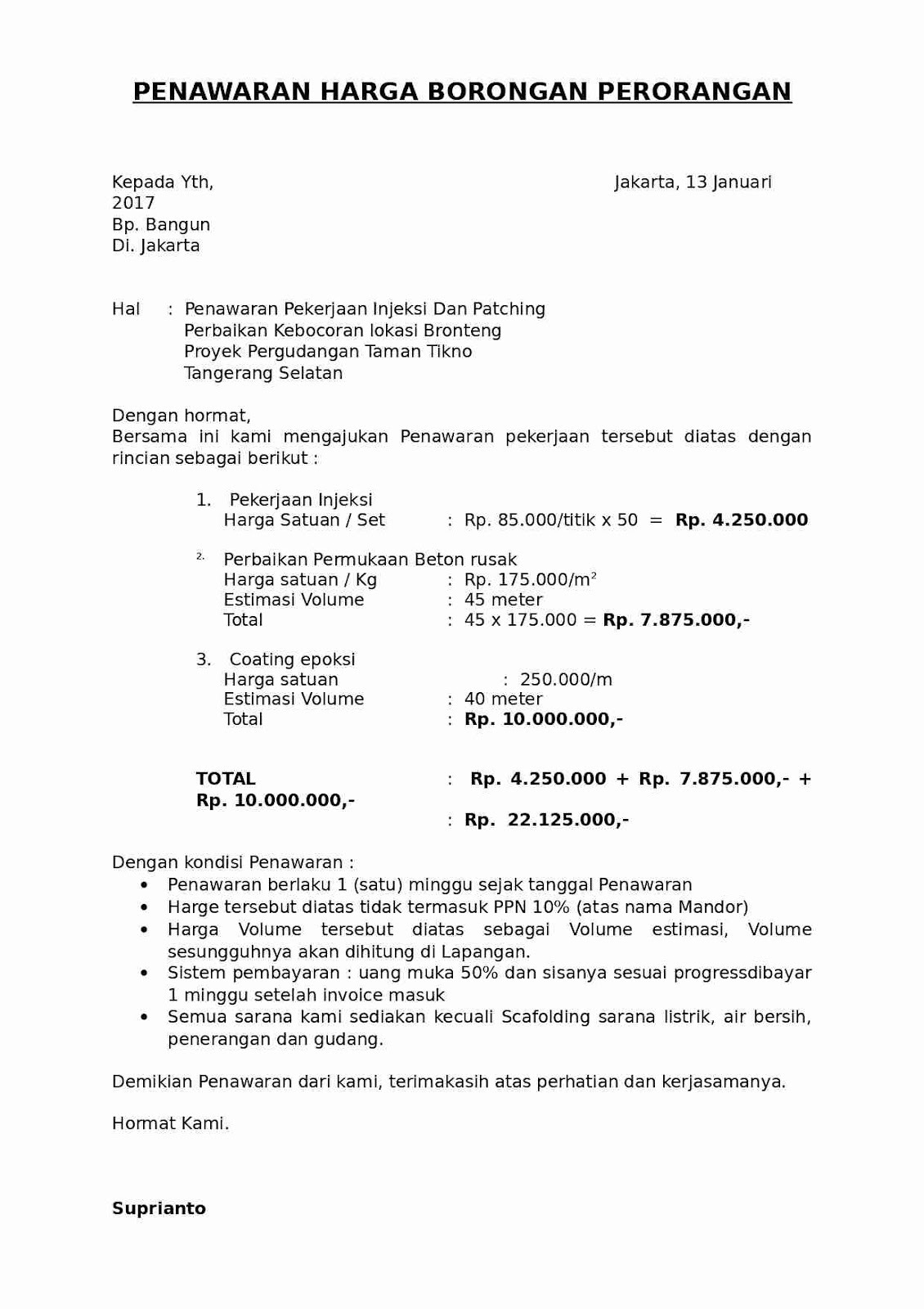
Source: scribd.com
You can develop each of these examples according to your business needs, from adding product details to adjusting the writing format.
Common Mistakes in Creating Price Quotation Letters
Although it may seem simple, there are still many common mistakes made when creating price quotation letters.
1. Incomplete Information
Many letters do not include important details such as product specifications or payment terms.
This can make potential customers hesitant or even reject the offer due to a lack of information.
2. Poor Formatting
A messy layout will make it difficult for readers to understand the content of the letter.
Make sure the structure is well organized so the information is easy to digest.
3. Lack of Price Transparency
Listing prices without explanation can cause confusion.
It is better to explain the price components to ensure transparency.
4. No Validity Period
Without a time limit, the offer may seem less professional.
Include a validity period to make it clearer and more structured.
5. Missing Contact Information
Without contact details, potential customers will have difficulty reaching you.
Always include a phone number or email address.
Read more: Debt Agreement Letter: Definition, Benefits, & Examples to Avoid Losses
FAQ About Price Quotation Letters
1. What is the difference between a price quotation letter and an invoice?
A price quotation letter is provided before a transaction occurs, while an invoice is issued after the transaction as a billing document.
2. Does a price quotation letter need to use a letterhead?
Ideally, yes, because a letterhead shows the identity and professionalism of the business.
3. How long is the validity period of a price quotation letter?
Generally, it ranges from 7 to 30 days, depending on company policy and the type of product or service.
4. Can a price quotation letter be sent via email?
Yes. Many businesses now send quotations in digital formats such as PDF via email.
5. Can the price in a quotation letter be negotiated?
Yes, especially in long-term cooperation or bulk purchases.
Conclusion
A price quotation letter is not just a formal document, but also an important tool to build communication and trust in business.
With the right structure, clear language, and professional delivery, you can significantly increase your chances of securing partnerships.
If you want your business processes to be more organized and integrated, it is time to switch to a more advanced solution.
ESB Core is an ERP system that helps automate business processes, from inventory management and financial reporting to multi-branch operations within a single platform.
With ESB Core, you can focus on growing your business without the hassle of handling time-consuming manual processes. Improve your business efficiency and performance now by contacting the ESB team!


