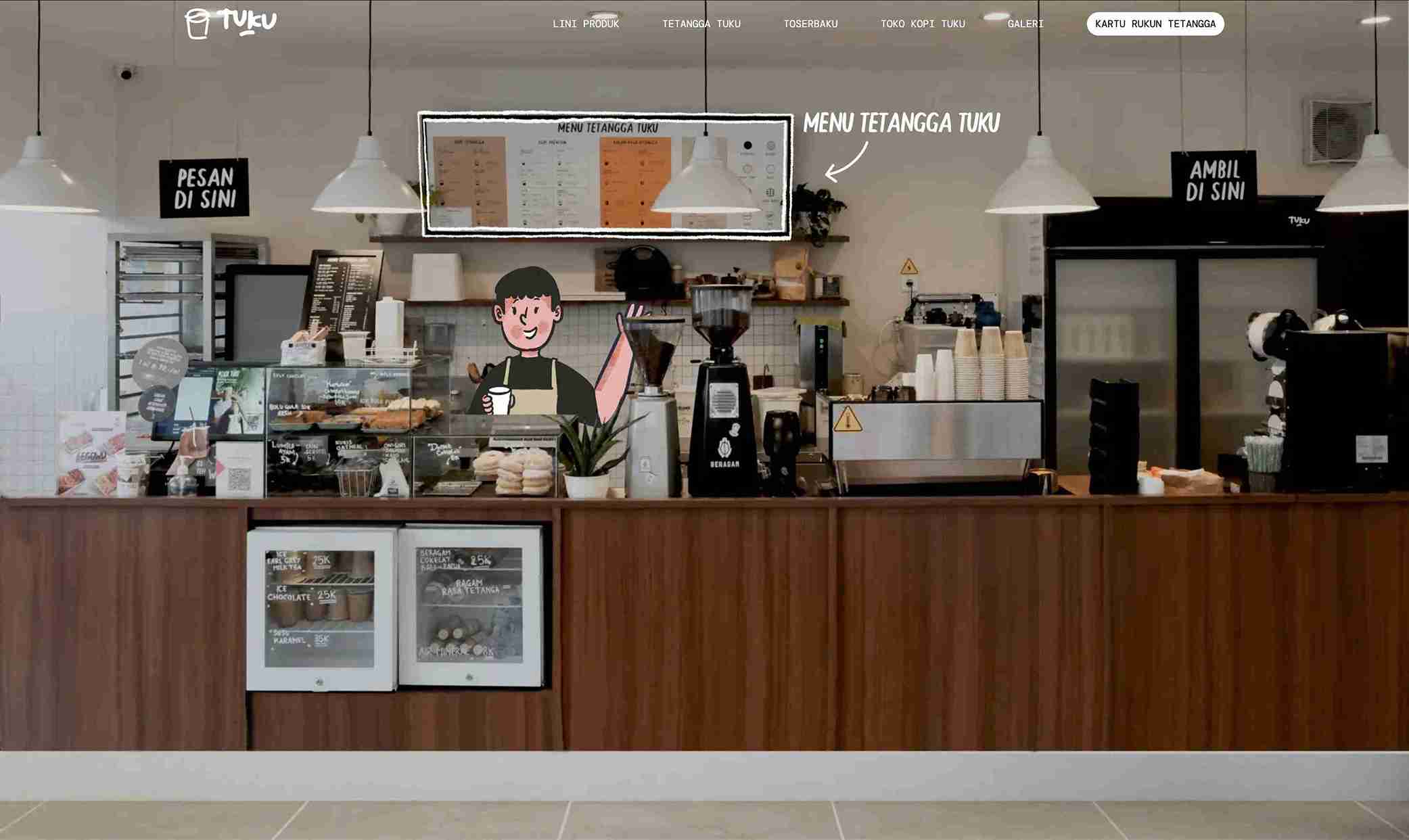
Amid the rapid growth of coffee businesses in Indonesia, only a few brands truly stand out with strong character and consistent strategy. One name that frequently comes up is Tuku, widely known by the public as Kopi Tuku.
Not because of aggressive expansion or massive marketing campaigns, but because of its simple yet highly calculated business approach.
On the surface, it may look like an ordinary coffee shop, but behind it lies a system that enables the business to generate up to IDR 1 billion in daily revenue.
Interestingly, this success has also sparked curiosity about the idea of a franchise Tuku. Many people are eager to know whether its business model can be replicated or even turned into a partnership opportunity.
In this article, we will explore Tuku’s business strategy in depth, from its operational model and product strength to the reasons why this brand remains relevant in a highly competitive market.
Getting to Know Tuku and Its Business Model
Tuku is not a brand that emerged from a passing trend. Its journey began with a simple vision: to provide high-quality coffee that feels close to everyday life.
Behind the brand lies a long process involving experimentation, market understanding, and the courage to make decisions that are not always popular.
One of Tuku’s greatest strengths lies in its focus on efficiency. Instead of building large cafés with extensive seating areas, Tuku adopts a take-away model.
This strategy is not merely trend-following, but a logical decision to increase transaction turnover. With this concept, each outlet can serve hundreds of customers daily without sacrificing speed of service.
On average, a Tuku outlet sells more than 800 cups per day. This number reflects how optimized their operational system truly is.
When multiplied by the number of existing outlets, the total daily revenue reaches billions of rupiah. This is not just about having many branches, but about ensuring that each branch operates at maximum performance.
Many people associate this success with the potential of a franchise Tuku. However, this is where the uniqueness of their strategy lies.
Tuku does not open a franchise system because it wants to maintain full control over quality and brand consistency.
While this decision may seem limiting in terms of expansion, it is precisely what keeps the brand strong and preserves its identity.
Signature Menu: Kopi Susu Tetangga as the Hero Product

Source: freepik.com
Every successful culinary business usually has one product that stays firmly in customers’ minds. For Tuku, this role is played by Kopi Susu Tetangga. This menu item is not just a drink, but a symbol of the brand itself.
What makes it special is not only the taste but also the process behind its creation. The blend of coffee and palm sugar did not come instantly.
It took approximately two and a half years of experimentation to achieve the perfect formula for Tuku Coffee. This shows that Tuku does not rush product launches but ensures quality before introducing them to the market.
Pricing also plays a crucial role in the strategy. With an affordable price point, this product appeals to a wide range of customers.
The combination of consistent taste and accessible pricing encourages repeat purchases and builds customer loyalty.
In the context of a franchise Tuku, having a strong hero product like this is actually a key factor.
Many franchise businesses fail to grow because they lack a compelling flagship product. Tuku proves that one well-developed product can serve as the foundation for long-term customer loyalty.
Read more: Understanding Kitchen Display System for Restaurant Kitchen Management
Expansion Targets and Large-Scale Potential
Although Tuku does not offer a franchise Tuku, it does not mean the brand lacks ambition to grow. On the contrary, expansion is carried out in a more controlled manner.
The number of outlets continues to increase, with a mid-term target of reaching around 100 outlets in the coming years.
If this target is achieved, the potential revenue will increase significantly. Assuming each outlet maintains stable performance, total annual revenue could nearly double compared to current figures.
This demonstrates that an efficient business model can drive substantial growth without compromising quality.
This also serves as an important lesson for anyone interested in a franchise Tuku or similar business models.
Expansion does not always have to be rapid; it must be strategic. Growth that is too aggressive without quality control can damage a brand in the long run.
On the other hand, Tuku’s success also opens opportunities for other brands to adopt a similar approach.
Focusing on operations, product consistency, and understanding the local market becomes the key to building a scalable business.
Built on Experimentation and Dedication
Tuku’s success did not happen overnight. Behind its impressive sales figures lies a long journey filled with experimentation and learning.
From selecting coffee beans and roasting techniques to menu formulation, everything went through extensive testing.
The founder of Tuku is known for being highly detail-oriented in building the brand. Every decision is based on direct experience in the field.
This approach ensures that the business is not only strong in concept but also solid in execution.
One particularly interesting aspect is how Tuku maintains its “neighborhood” identity.
This concept makes the brand feel close and relevant to customers. It is not just a place to buy coffee, but a part of daily routines.
In the context of a franchise Tuku, this level of dedication becomes a major differentiator. Many businesses aim to expand quickly, but not all are willing to go through the necessary long process.
Tuku demonstrates that a strong foundation is far more important than instant expansion.
Read more: 30 Promising Low-Capital Food Business Ideas for Beginners in 2026!
FAQ About Franchise Tuku
1. Can Tuku be franchised?
Currently, Tuku, often searched as Kopi Tuku, does not offer a franchise system. The brand chooses to manage all its outlets directly to maintain quality and consistency.
2. Why does Tuku not open a franchise?
The main reason is quality control. By not offering a franchise Tuku, the brand ensures that every product meets the same standard across all outlets.
3. Is there a possibility that franchise Tuku will be available in the future?
The possibility always exists, but as of now, there has been no official indication that Tuku will open a partnership system.
4. What are some alternatives to a Tuku franchise?
Several other coffee brands already offer partnership opportunities, making them viable options for those looking to start a franchise-based business.
5. What are the key lessons from Tuku’s business model?
Focusing on quality, operational efficiency, and brand consistency are the main principles that can be applied across various culinary businesses.
Conclusion
Tuku proves that an effective strategy does not always have to be complex. By focusing on efficiency, product quality, and customer experience, the business has achieved remarkable revenue without relying on a franchise Tuku system.
Its consistent, experiment-driven approach keeps the brand relevant and continuously growing in an increasingly competitive market.
If you are building a culinary business and want to achieve a well-structured operational system like Tuku, having the right technology is essential.
ESB POS can be the ideal solution to manage your business from end to end. From menu management, multi-cashier systems, integration with food delivery platforms, to loyalty programs, everything can be handled within a single platform.
Optimize your culinary business operations and boost revenue with a more modern system using ESB POS. Contact the ESB team today and experience the difference.


