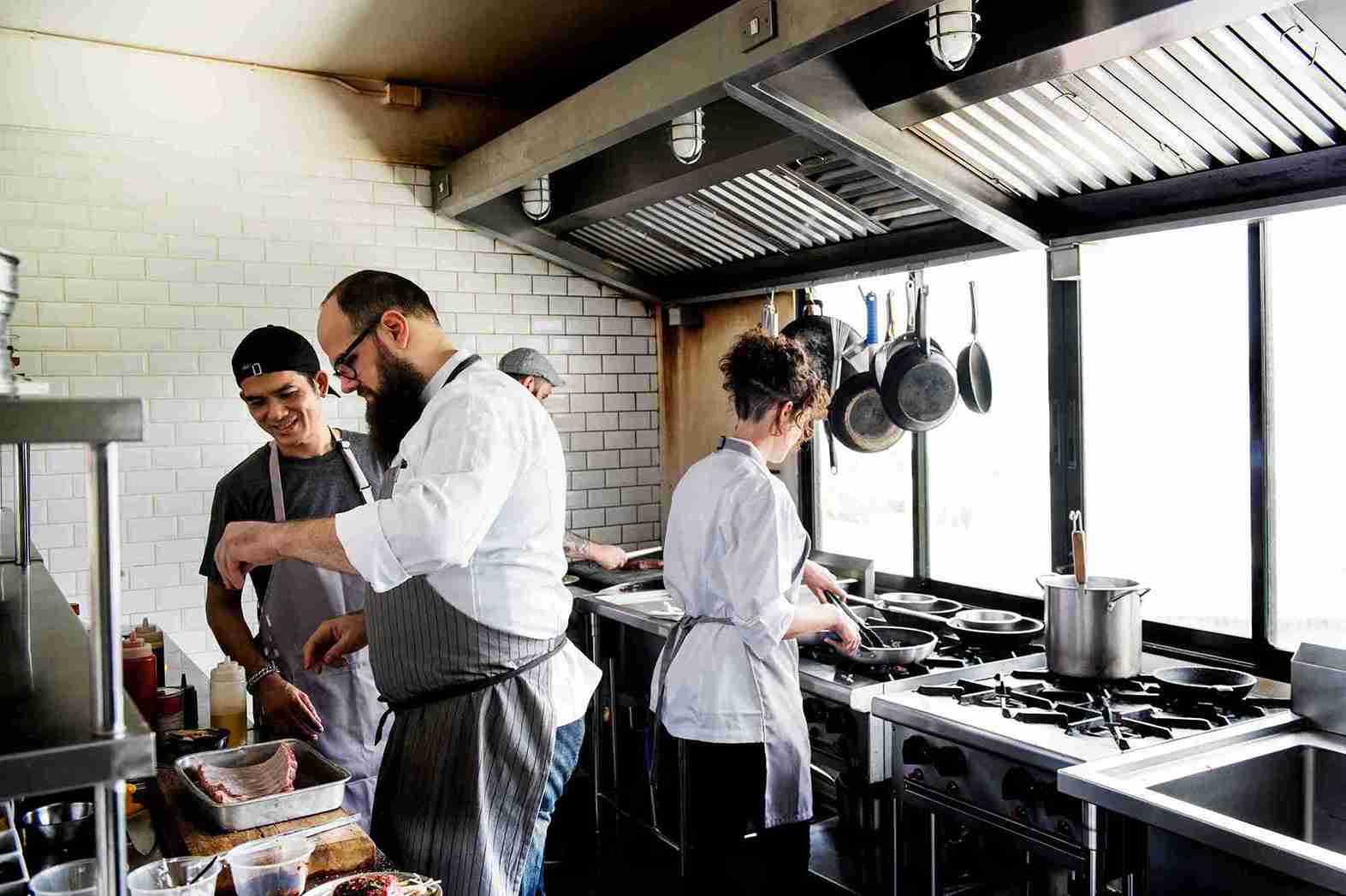
Have you ever gone to a restaurant where the food arrived quickly, tasted consistent, and was always neatly presented? Behind that experience, there is a team that often goes unnoticed but plays a very significant role—the kitchen crew.
In the fast-paced world of F&B, the kitchen is not just a place for cooking.
It is the operational center that determines quality, service speed, and even business profitability.
This is where the kitchen crew works, from managing workflow and maintaining quality to ensuring everything runs according to standards.
That’s why understanding the kitchen crew is not only important for those who want to work in a kitchen, but also for culinary business owners who want their operations to be more organized and efficient.
What Is a Kitchen Crew?
A kitchen crew is the entire team working in the kitchen area of a restaurant, café, or hotel, responsible for the preparation and serving of food.
From preparing ingredients and assisting in cooking to maintaining kitchen cleanliness, all of these tasks fall under the role of the kitchen crew.
Simply put, the kitchen crew is the “engine” of the kitchen. Without them, chefs would not be able to work optimally, and restaurant operations could easily fall into disarray.
In practice, the kitchen crew does not only focus on cooking. They also ensure that ingredients are always available, equipment is ready to use, and hygiene standards are consistently maintained.
This combination of responsibilities makes their role extremely crucial in maintaining food quality and customer satisfaction.
Interestingly, many problems in culinary businesses actually originate from poorly organized kitchens.
From delayed orders and sudden ingredient shortages to uncontrolled waste, these issues are often directly related to how the kitchen crew is managed.
What Are the Duties of a Kitchen Crew?
In general, the kitchen crew is responsible for maintaining smooth kitchen operations from start to finish. However, when examined in more detail, their responsibilities are quite broad and interconnected:
1. Preparing Ingredients (Mise en Place)
Before the kitchen begins operating, the kitchen crew must ensure that all ingredients are ready to use. This includes cutting vegetables, preparing seasonings, and marinating ingredients.
This preparation is essential because it determines the kitchen’s speed during busy hours. Without proper mise en place, the cooking process can become slow and disorganized.
2. Assisting the Cooking Process
Kitchen crew members often assist chefs during the cooking process, especially when orders are overwhelming. They handle basic tasks such as frying, boiling, or plating dishes.
This role helps streamline the kitchen workflow and makes it more efficient, while also reducing the chef’s workload.
3. Maintaining Ingredient Availability
Kitchen crew members must regularly check ingredient stock. They ensure that all ingredients are available, in good condition, and ready to use.
If any ingredients are running low or no longer suitable for use, they must take immediate action, such as restocking or discarding spoiled items.
4. Maintaining Kitchen Cleanliness and Sanitation
Cleanliness is non-negotiable in the kitchen.
The kitchen crew is responsible for keeping the workspace clean, including all cooking equipment.
A clean kitchen is not only about appearance, but also directly affects food quality and customer health.
5. Controlling Ingredient Usage
Every ingredient used must follow proper measurements. The kitchen crew helps ensure efficient usage to avoid waste.
This is important for keeping production costs under control and maintaining healthy business profits.
6. Maintaining Food Quality Consistency
The kitchen crew plays a role in ensuring that every dish served has consistent taste, presentation, and quality.
This consistency is what encourages customers to return again and again.
Why Is Kitchen Crew Important in F&B Operations?
In the culinary business, the kitchen is the heart of operations, and the kitchen crew ensures that this heart keeps functioning properly.
When the kitchen crew works with a well-organized system, all processes become more efficient.
Serving times are faster, errors are minimized, and ingredient usage is better controlled.
On the other hand, a poorly organized kitchen can create a domino effect. Orders get delayed, customers become dissatisfied, and operational costs increase without being noticed.
Therefore, the kitchen crew does not just run operations, they also play a role in maintaining the overall stability of the business.
Kitchen Crew Duties and Job Descriptions in Restaurants
When viewed from daily activities, kitchen crew job responsibilities follow a clear and repetitive pattern. This structure is essential for maintaining consistent operations every day:
1. Preparing Equipment Before Operations
Kitchen crew members must ensure that all equipment is clean and ready to use before the kitchen starts operating.
This includes checking the condition of tools and ensuring everything is available according to needs.
This preparation helps prevent disruptions when the kitchen becomes busy.
2. Ensuring Ingredients Are Ready to Use
In addition to equipment, ingredients must also be ready.
The kitchen crew ensures that ingredients are pre-processed and properly stored.
This allows the cooking process to run faster and more efficiently.
3. Supporting Production During Busy Hours
When orders pile up, the kitchen crew maintains the kitchen’s workflow stability.
They assist chefs and ensure that all processes run smoothly without obstacles.
At this stage, team coordination becomes extremely important.
4. Cleaning Equipment Regularly
Used equipment must be cleaned immediately so it can be reused.
This process is continuous throughout operations, not just at the end of a shift.
5. Managing Waste and Leftover Ingredients
Kitchen crew members are also responsible for managing kitchen waste so it does not accumulate.
This is important for maintaining cleanliness and work efficiency.
6. Conducting Stock Checks
Kitchen crew members perform regular stock checks to ensure that no ingredients are lacking.
This helps prevent operational disruptions on the following day.
Read more: Restaurant Organizational Structure: The Foundation of a Successful Culinary Business
Skills Required for Kitchen Crew

Source: freepik.com
To carry out all these responsibilities effectively, kitchen crew members need a balanced combination of technical and non-technical skills:
1. Understanding Ingredients and Equipment
Kitchen crew members must be familiar with various food ingredients and kitchen tools.
This understanding helps them work faster and reduces the need for constant guidance.
It also minimizes errors in using ingredients and equipment.
2. Basic Cooking Skills
Even though they are not the main chefs, kitchen crew members must have basic cooking skills.
This allows them to be more flexible, especially during busy periods.
It also helps them grow faster in their careers.
3. Physical and Mental Endurance
The kitchen environment is demanding, hot, fast-paced, and often exhausting.
Kitchen crew members need good stamina to stay focused throughout their shifts.
Mental resilience is equally important to avoid panic during peak hours.
4. Discipline and Attention to Detail
Kitchens require high precision. Small mistakes can have significant consequences.
Kitchen crew members must be detail-oriented and follow established standards.
Discipline is key to maintaining consistent quality.
5. Communication and Teamwork
The kitchen is a highly dynamic team environment.
Kitchen crew members must communicate clearly to avoid misunderstandings.
Good coordination ensures smoother and more efficient workflows.
6. Adaptability to Systems and Technology
Today, many kitchens use digital systems.
Kitchen crew members need to adapt to these technologies to work more effectively.
This skill is also a valuable advantage in the modern workplace.
Kitchen Crew Structure in Restaurants
Kitchen structures are designed to ensure that each role has clear responsibilities. Here are the common positions:
1. Head Chef / Kitchen Manager
This position is responsible for the overall kitchen operations.
They set standards, manage the team, and ensure quality is maintained.
They also play a role in strategic decision-making within the kitchen.
2. Chef de Partie
The Chef de Partie is responsible for a specific section of the kitchen.
They ensure that all processes in their station meet the required standards.
This role is crucial for maintaining consistency across all kitchen sections.
3. Commis / Assistant Cook
Commis assists with ingredient preparation and cooking processes.
They are usually at the early stage of their careers and learn directly from chefs.
This role serves as a foundation for career growth.
4. Steward
Stewards are responsible for maintaining kitchen cleanliness and equipment.
Without this role, operations could be disrupted due to unprepared tools.
Maintaining cleanliness also supports food quality standards.
5. Expeditor
The expeditor manages the flow of dishes leaving the kitchen.
They ensure that orders are served on time and in the correct sequence.
This role is especially important in high-volume restaurants.
Kitchen Crew Salary in Indonesia
Kitchen crew salaries in Indonesia generally range from IDR 2,000,000 to IDR 4,500,000 per month, depending on location, business scale, and experience.
In large restaurants or high-end hotels, salaries can be higher due to more complex operational standards and job demands.
In addition to base salary, kitchen crew members often receive benefits such as service charges, meal allowances, or performance bonuses.
Interestingly, this profession offers a clear career path. With experience and skill development, kitchen crew members can advance to positions such as chef, sous chef, and head chef.
Challenges Faced by Kitchen Crew
Despite their important role, kitchen crew members face various challenges that require readiness and adaptability:
1. High Pressure During Peak Hours
Busy hours are the most challenging moments in the kitchen.
Kitchen crew members must work quickly without losing focus while maintaining quality.
This situation often tests their endurance.
2. Risk of Human Error
Small mistakes, such as incorrect measurements, can have significant consequences.
Therefore, kitchen crew members must work with clear systems and standards.
Attention to detail is essential.
3. Complexity of Stock Management
Managing ingredient stock is not simple, especially when done manually.
Recording errors can lead to unnoticed losses.
A well-organized system is crucial.
4. Challenging Work Environment
The kitchen is a high-temperature, high-activity environment.
Kitchen crew members must be able to work under these conditions daily.
Adaptability is key to staying productive.
5. Intensive Team Coordination
Kitchen work requires fast and accurate communication. Poor coordination can disrupt operations. Teamwork is therefore essential.
6. High Demand for Consistency
Customers always expect the same quality.
Maintaining this consistency is not easy, especially during busy conditions.
Kitchen crew members must uphold standards at all times.
Read more: Commis Chef: Main Duties and Essential Skills to Have in a Professional Kitchen
FAQ About Kitchen Crew
1. What is a kitchen crew?
A kitchen crew is a team responsible for preparation, cooking support, and maintaining kitchen cleanliness to ensure smooth operations.
2. Do kitchen crew members need cooking skills?
Yes, at least basic cooking skills are required to assist chefs when needed.
3. How much is a kitchen crew salary in Indonesia?
Around IDR 2,000,000–IDR 4,500,000 depending on location and workplace.
4. Is there a career path for kitchen crew?
Yes, starting from commis to chef and head chef.
5. What is the biggest challenge for kitchen crew?
Handling pressure during busy hours while maintaining food quality consistency.
Conclusion
Kitchen crew is the foundation of kitchen operations that determines quality, speed, and efficiency in the culinary business.
When this team works with a well-organized system, the kitchen becomes a strong driver in delivering the best customer experience.
To support kitchen crew performance, using a system like ESB Kitchen can help optimize operations.
With features such as order management, serving time analysis, and automated communication between the kitchen and cashier, all processes become faster and more accurate with fewer errors.
If you want your kitchen to run more efficiently and smoothly, now is the right time to switch to a more modern system. Reach out to the ESB team and discover how ESB Kitchen can help optimize your kitchen operations.


