
Have you ever seen Ridwan Kamil serving customers at a coffee shop in Bandung and wondered, who owns Jabarano Coffee? The former Governor of West Java has been spotted serving customers at one of its outlets, leading many people to assume that Jabarano Coffee is his business.
However, there is a longer business story behind the Jabarano name. This West Java coffee brand was established by Arnold Dharmma and has grown from a single outlet into a business with multiple locations. Its concept goes beyond providing a place to hang out. Jabarano also aims to introduce West Java coffee to a wider audience.
So, what is Jabarano Coffee, where are Jabarano Laswi and Jabarano Lengkong located, who owns the brand, and how does the business maintain its operations as it continues to grow? Let’s explore its story.
Getting to Know Jabarano Coffee
Jabarano Coffee is a coffee shop brand from West Java that places local coffee at the heart of its business identity. Officially, Jabarano describes itself as a creative and collaborative coffee space that explores the richness of West Java coffee through coffee experiences, culture, art, and collaboration.
The name Jabarano itself has an interesting story. According to Jabarano’s official website, the name was inspired by the term Americano. In the brand’s business communications, the name is also associated with the ambition to make a coffee brand from West Java the number one choice.
Its appeal goes beyond coffee. Several Jabarano outlets combine local elements with modern designs, allowing visitors to come not only for drinks but also for meals, meetups with friends, casual work sessions, or simply to enjoy Bandung’s atmosphere.
Behind these experiences, Jabarano also pays attention to the local coffee ecosystem. The brand identifies local sourcing and partnerships with coffee farmers as part of its efforts to build a more sustainable coffee ecosystem.
This concept gives Jabarano a distinctive identity. Coffee is not treated merely as a menu item but as part of a broader story about West Java that the brand wants to share with more customers.
Jabarano Laswi and Jabarano Lengkong
As Jabarano Coffee has grown, the brand has expanded into several areas of Bandung, with outlet characteristics that can adapt to their locations and visitors’ needs. Two locations that attract considerable interest are Jabarano Laswi and Jabarano Lengkong.
Jabarano Laswi is located at Jl. Laswi No. 24, Bandung, near the Bandung Creative Hub area. This outlet is part of Jabarano’s expansion in Bandung, following its earlier presence in the Pahlawan and Braga areas.
Meanwhile, Jabarano Lengkong is located at Jl. Lengkong Besar No. 58, Bandung. This location extends Jabarano’s reach into the Lengkong area and offers another option for customers who want to enjoy the brand’s menu in the neighborhood.
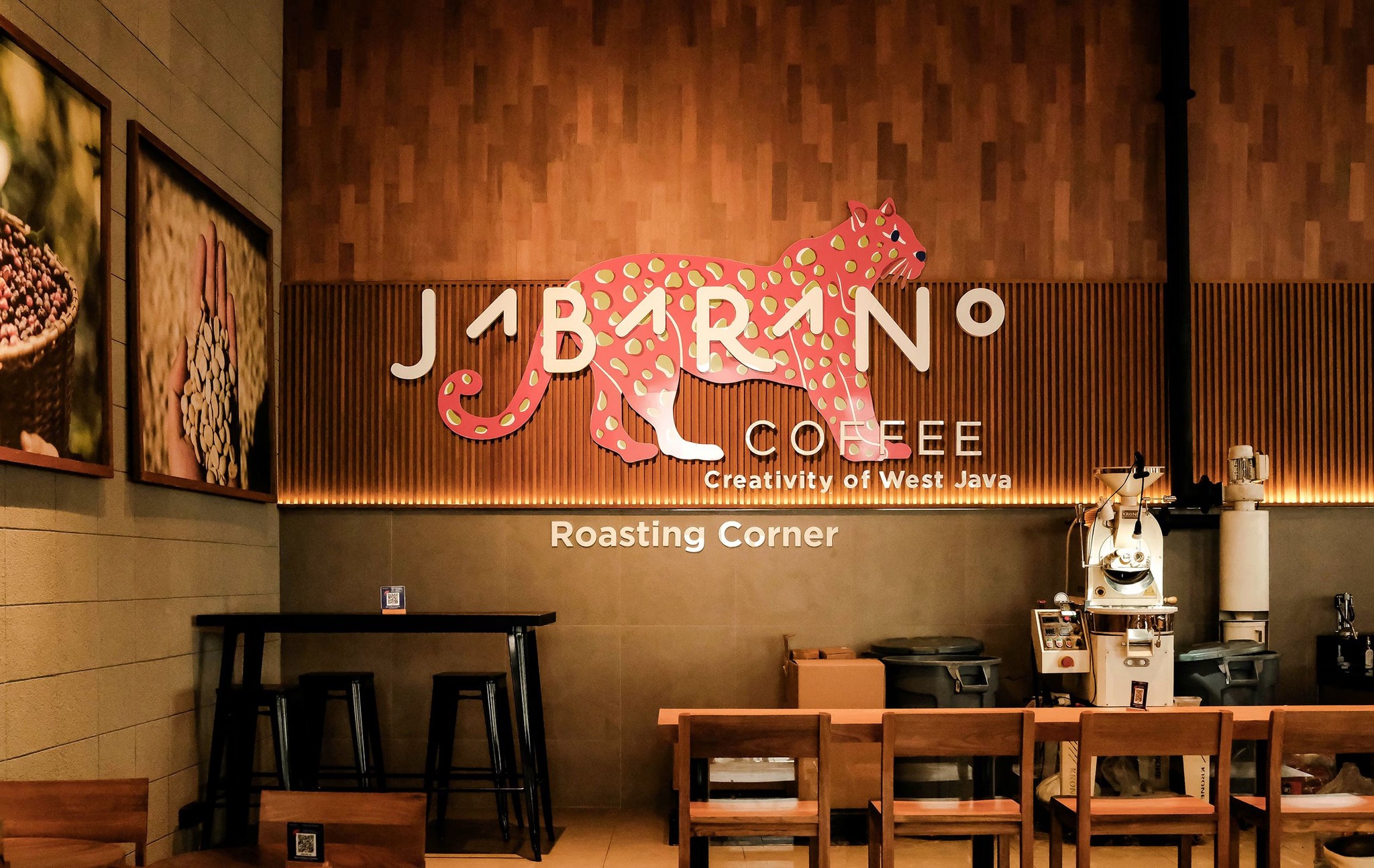
Interestingly, Jabarano does not rely on a single concept for all its outlets. As the business develops, each location can have its own identity based on the surrounding area and target customers. This can be seen in several Jabarano outlets that feature distinct identities, including the Kuda Lumping, Angklung, and Leopard concepts.
Therefore, if you want to visit Jabarano, the experience does not necessarily have to be the same at every location. The character of each outlet is, in fact, part of the brand’s journey.
Jabarano Coffee Menu: Coffee and Food Worth Trying
Source: magnific.com
Talking about Jabarano would not be complete without discussing its coffee. One interesting aspect of the brand is its use of house blends to maintain consistent flavors while allowing it to source beans from different regions.
Some blends that form part of Jabarano’s identity include Surili, Merak, and Nusantara. These blends are used in various coffee drinks, including iced milk coffee and classic coffee. Some Jabarano menu items also feature names such as Kopi Merak and Kopi Susu Surili, reinforcing the brand’s local identity.
If you want to try the food, there is also a wide range of options. These include Mie Kari Spesial Jabarano, Mie Ayam Batur, Bubur Ayam Raos Pisan, and various fried rice dishes, rice bowls, and other meals. For snacks, customers can choose from options such as cireng, cuanki, crispy tempeh, fried cassava, and honey-fried bananas.
One interesting detail is how the menu names incorporate local elements. Examples include Mie Kari Spesial Jabarano, Mie Ayam Batur, and dishes featuring names such as Raos Pisan and Si Kasep. As a result, dining at Jabarano is not just about coffee but also about exploring flavors connected to Indonesia’s culinary identity.
When choosing coffee, you can select a drink that suits your preferences. If you enjoy milk-based coffee, varieties made with Surili or Merak blends may be worth trying. For those who prefer to appreciate coffee in a simpler form, Jabarano also offers classic coffee options and various signature creations.
Who Owns Jabarano Coffee?
The question “Who owns Jabarano Coffee?” often comes up because the brand is associated with Ridwan Kamil. He has been seen at Jabarano outlets several times and has even served customers. These appearances have led the public to believe that Jabarano Coffee is his business.
However, according to Jabarano’s official information and media reports, the person behind the establishment and development of Jabarano Coffee is Arnold Dharmmadhyaksa, also known as Arnold Dharmma. Jabarano’s official website identifies Arnold as a co-founder, while several media outlets describe him as the founder and owner of Jabarano Coffee.
Arnold has a background in the food and beverage (F&B) industry. After completing his education at NHI, he worked in the hotel and restaurant industry before establishing various culinary businesses. He later had the opportunity to develop Jabarano and opened its first outlet in 2022.
Ridwan Kamil, meanwhile, has played an important role in the brand’s journey. Jabarano identifies him as the brand initiator, while Arnold is one of the key figures responsible for establishing and running the coffee shop business.
Therefore, if you are wondering who owns Jabarano Coffee, Arnold Dharmma is the person most frequently identified as its founder or owner. Ridwan Kamil’s involvement is more closely associated with the brand’s name, initial concept, collaborations, and support for its development.
Read also: A Guide to Success: 8 Steps to Developing Business Ideas and Opportunities
Growing a Coffee Shop While Maintaining Operational Consistency
Opening a single coffee shop is very different from managing a business with multiple outlets. As customer numbers increase and new branches open, the challenge goes beyond keeping the coffee delicious.
Transaction volumes rise, inventory needs to be monitored, reports must be easy to review, and activities across every outlet need to remain under control. If all processes still rely on manual records or disconnected systems, the larger the business becomes, the harder it is for owners to gain a complete picture of its overall performance.
This is why technology plays an important role in scaling an F&B business. A point-of-sale (POS) system can help record transactions, while an enterprise resource planning (ERP) system can connect operational data, raw materials, and other business requirements within one ecosystem.
At this stage, an integrated system becomes essential. Data from different operational activities can be managed in one system, making it easier for business owners to monitor individual outlets, evaluate performance, and make data-driven decisions.
With a more organized operational foundation, businesses can expand without making outlet management increasingly complicated.
Jabarano Coffee Testimonial Video: Managing the Business with ESB
Jabarano’s experience in managing its business and using ESB technology has also been shared through an official ESB testimonial video. In the testimonial, Arnold explains how various ESB systems support Jabarano’s daily operations. Watch the full testimonial in the video below:
One of the challenges Jabarano faces is its high customer traffic. With approximately 500 to 1,000 visitors per day, relying on a single cashier can potentially lead to long queues. ESB Order helps customers place orders directly from their tables, reducing the need for every transaction to go through the cashier queue.
Arnold also highlights the ease of accessing data and monitoring business performance. Through an integrated system, product data can be accessed more easily in real time. This helps the team monitor inventory while reducing the potential for fraud in daily operations.
In addition, customer data collected through the POS and ordering systems can be used to maintain relationships after customers have completed their visits. This data can support loyalty programs and follow-up activities, giving customers more reasons to return and make additional purchases.
For Jabarano, one of the practical benefits of using ESB is the system’s ease of use and the support services provided. Technology is therefore not just a tool for recording transactions but also an integral part of how the business manages its operations and customer relationships.
Business Lessons from Jabarano Coffee’s Growth
There is an important lesson to learn from Jabarano Coffee’s journey. Business growth does not come solely from offering appealing products. It also requires the willingness to build effective systems behind the scenes.
From a product perspective, Jabarano has established a strong identity through its exploration of West Java coffee. In terms of its physical spaces, each outlet is developed to reflect its location and target customers. From a business perspective, however, this growth requires systems that can keep pace with increasing transaction volumes and operational complexity.
This is an important consideration for coffee shop owners whose businesses are expanding. Expansion should not focus exclusively on opening new outlets while transaction management, inventory, reporting, and customer data remain scattered across separate systems.
Customer experience is also shaped by more than coffee quality and ambiance. Customers may have an unpleasant experience if they have to wait too long in line, their orders are recorded late, or the payment process is inconvenient.
For this reason, coffee shop growth should go hand in hand with stronger operations. When products, service, people, and technology work together, a business has a more solid foundation for sustainable growth.
Read also: The Business Strategy Behind Kopi Tuku’s Daily Revenue of IDR 1 Billion
Frequently Asked Questions About Jabarano Coffee
1. Who owns Jabarano Coffee?
Jabarano Coffee was established and developed by Arnold Dharmma. Ridwan Kamil played a role in initiating the Jabarano name and brand and has also supported its development.
2. Who is the owner of Jabarano Coffee?
Arnold Dharmma is widely recognized as the founder or owner of Jabarano Coffee. He has built and developed the Jabarano business in the F&B industry.
3. Who is the founder of Jabarano Coffee?
The founder or owner frequently mentioned in official sources and media reports is Arnold Dharmmadhyaksa, also known as Arnold Dharmma.
4. Where is Jabarano Laswi located?
Jabarano Laswi is located at Jl. Laswi No. 24, Bandung, near the Bandung Creative Hub area.
5. Where is Jabarano Lengkong located?
Jabarano Lengkong is located at Jl. Lengkong Besar No. 58, Bandung.
6. What is on the Jabarano Coffee menu?
The Jabarano Coffee menu includes various coffee drinks, non-coffee beverages, main courses, snacks, and pastries. Popular options include Mie Kari Spesial Jabarano, Mie Ayam Batur, Bubur Ayam Raos Pisan, fried rice, and coffee drinks made with blends such as Surili and Merak.
Conclusion
Jabarano Coffee demonstrates how a local brand can grow by incorporating regional identity into its products, physical spaces, and customer experiences. From West Java coffee and Indonesian-inspired menu options to its presence in locations such as Laswi and Lengkong, Jabarano continues to develop its distinctive business identity. Behind this growth, Arnold Dharmma plays an important role as the brand’s founder, while Ridwan Kamil has contributed to the brand’s naming and initial concept.
If you are growing your own coffee shop, your business expansion should be supported by operational systems that can handle increasing transaction volumes. ESB POS is a comprehensive point-of-sale application designed specifically for culinary businesses. It helps manage transactions, menus, promotions, tables, multiple cashiers, customer displays, and integrations with GrabFood, GoFood, and ShopeeFood.
ESB POS also supports loyalty programs, reservations, digital vouchers, kitchen displays, and deposit systems for food court concepts. Together with ESB Order and ESB Kitchen, the ESB ecosystem helps culinary businesses manage ordering and operations through a more integrated system. ESB Order is also reported to help increase transactions by up to 60% through AI-powered recommendations and speed up the ordering process by up to 40% compared with manual systems.
If your culinary business is preparing to expand to more outlets, now is the time to build an operational foundation that can grow alongside your business. Contact the ESB team to discover solutions tailored to your coffee shop’s needs.


